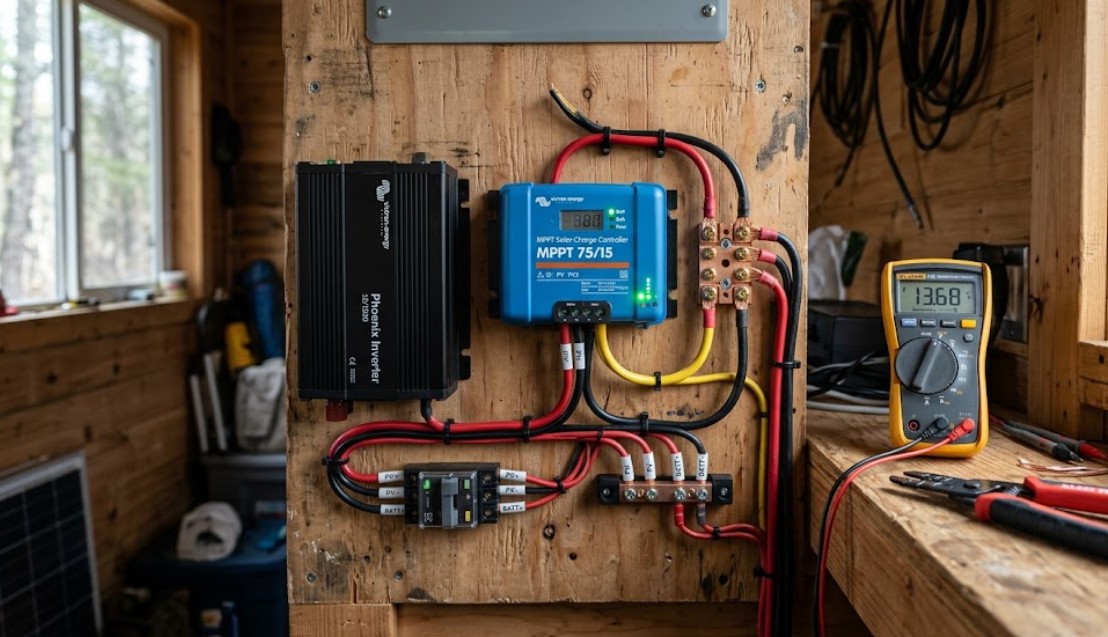
A solar setup for micro cabin living provides reliable electricity in remote locations without depending on utility infrastructure. Whether used for weekend retreats, hunting cabins, or full-time off-grid living, a properly designed micro cabin solar system delivers consistent power, reduces long-term costs, and ensures energy independence.
This complete guide explains how to design, size, install, and optimize a solar setup for micro cabin, covering batteries, solar panels, wiring, inverters, and real-world system configurations.
Table of Contents
Why a Solar Setup for Micro Cabin Is the Most Practical Power Solution
A micro cabin often sits far from traditional power lines. Running grid electricity can cost tens of thousands of dollars, making a solar setup for micro cabin the most efficient and economical alternative.
Key Advantages
- Energy independence in remote locations
- Quiet operation without generators
- Low maintenance requirements
- Long-term cost savings
- Environmentally sustainable power
- Scalable as energy needs grow
A properly designed system provides 24/7 electricity, even during cloudy weather or nighttime conditions.
How a Solar Setup for Micro Cabin Works
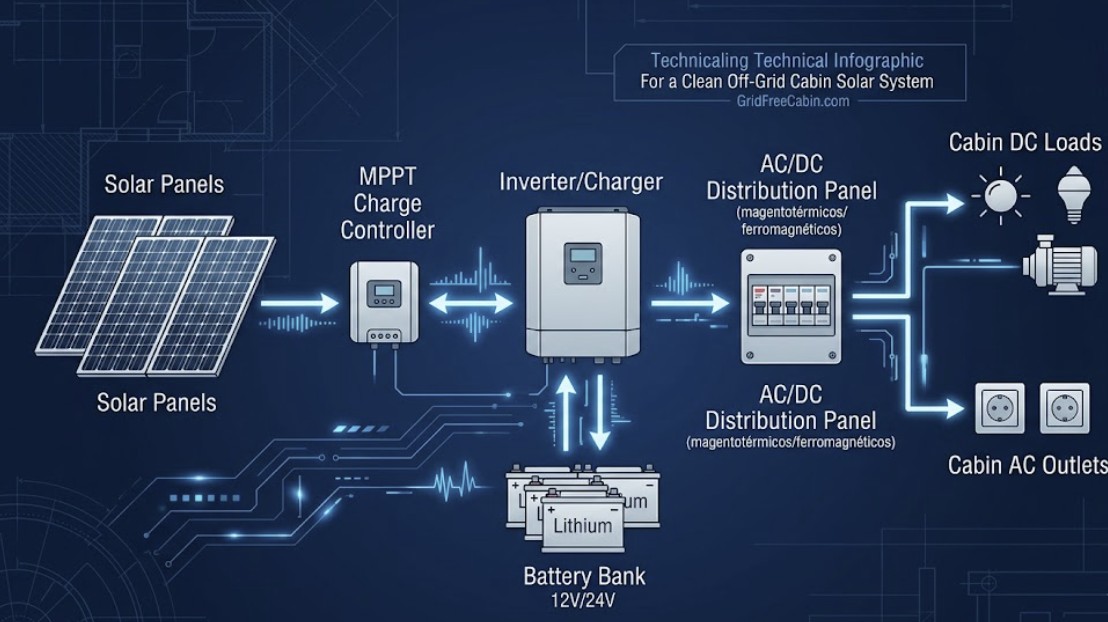
A complete solar system for micro cabins consists of four primary components:
Core Components
Solar Panels
Solar panels capture sunlight and convert it into DC electricity. Panel size and quantity depend on energy consumption and available sunlight.
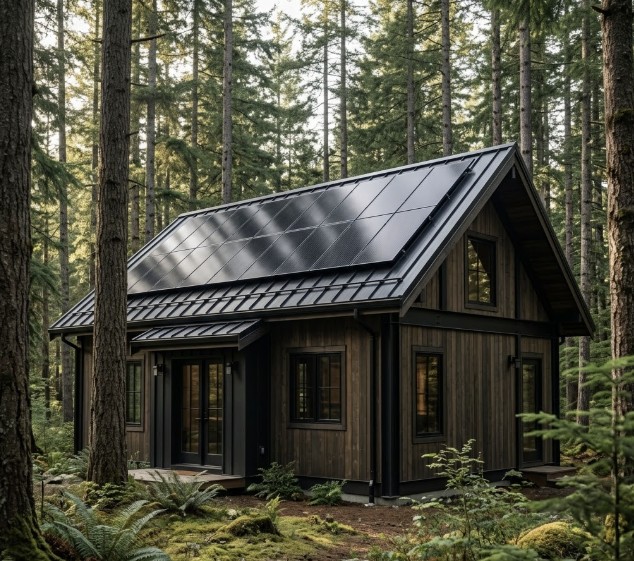
Even for a micro space, choosing high-efficiency hardware is better than adding more panels. See the [best solar panels for tiny house] lightweight and flexible options here.
Battery Bank
Batteries store solar energy generated during the day for use at night or cloudy periods.
Common battery options:
| Battery Type | Lifespan | Maintenance | Best For |
|---|---|---|---|
| AGM | 4-7 years | Low | Small cabins |
| Gel | 5-8 years | Low | Cold climates |
| Flooded Lead Acid | 3-6 years | High | Budget setups |
| LiFePO4 | 10-15 years | Very Low | Premium systems |
Lithium LiFePO4 batteries provide the best long-term performance for a solar setup for micro cabin.
Charge Controller
The charge controller regulates voltage between solar panels and batteries.
Two types:
- PWM (Budget friendly)
- MPPT (Higher efficiency, recommended)
MPPT controllers increase system efficiency by 15-30%.
Solar Inverter
The inverter converts DC power into AC electricity for appliances.
Two types:
- Pure sine wave (Recommended)
- Modified sine wave (Budget)
Pure sine wave inverters protect electronics and appliances.
DC vs AC Micro Cabin Solar Design (When to Skip the Inverter)
Many micro cabins operate more efficiently using direct DC systems instead of converting everything to AC power. This approach reduces energy losses, lowers system cost, and simplifies installation.
Inverter losses typically range from 8% to 15%, meaning a DC-first design improves total system efficiency.
If you want to see how this DC-first logic applies to a larger, more permanent structure, see our [complete off-grid power blueprint for retreat cabins].
When a DC-Only Solar Setup for Micro Cabin Makes Sense
DC-only systems work best when powering:
- LED 12V lighting
- USB charging ports
- 12V water pumps
- 12V refrigerators
- 12V ventilation fans
- 12V routers or Starlink setups
Advantages:
- No inverter required
- Lower battery drain
- Lower installation cost
- Reduced wiring complexity
This is particularly useful for:
- Weekend cabins
- Tiny cabins under 200 sq ft
- Remote hunting cabins
- Seasonal micro cabins
Hybrid DC + AC Micro Cabin Solar Design
Most modern solar setup for micro cabin installations use hybrid systems:
- DC for lighting and pumps
- AC for appliances and electronics
This hybrid design:
- Maximizes efficiency
- Maintains flexibility
- Reduces battery size requirements
Solar Setup for Micro Cabin: System Size Guide
Choosing the correct system size is critical. Below is a practical sizing reference:
| Cabin Use | Solar Panel Size | Battery Size | Inverter |
|---|---|---|---|
| Weekend Micro Cabin | 200W–400W | 1-2 batteries | 300W–600W |
| Small Cabin (Lights + Devices) | 400W–800W | 2-4 batteries | 600W–1000W |
| Medium Micro Cabin | 800W–1500W | 4-6 batteries | 1000W–2000W |
| Full-Time Off-Grid Cabin | 1500W–3000W | 6-10 batteries | 2000W–3000W |
To get a precise estimate based on your specific location and roof tilt, you can use the [NREL PVWatts Calculator] to simulate your monthly energy harvest.
Calculating Power Needs for Micro Cabin Solar System
Typical micro cabin energy usage:
| Appliance | Watts | Hours | Daily Usage |
|---|---|---|---|
| LED Lights | 20W | 5 hrs | 100Wh |
| Phone Charging | 10W | 3 hrs | 30Wh |
| Laptop | 60W | 3 hrs | 180Wh |
| Water Pump | 120W | 1 hr | 120Wh |
| Mini Fridge | 80W | 8 hrs | 640Wh |
Total Daily Usage Example: 1070Wh (1.07kWh)
Recommended system size: 400W-600W solar panels
Solar Panel Placement for Micro Cabin
Optimal solar positioning dramatically improves performance.
Best Orientation
- Face south (Northern Hemisphere)
- Tilt angle = Latitude
- Avoid shade at all times
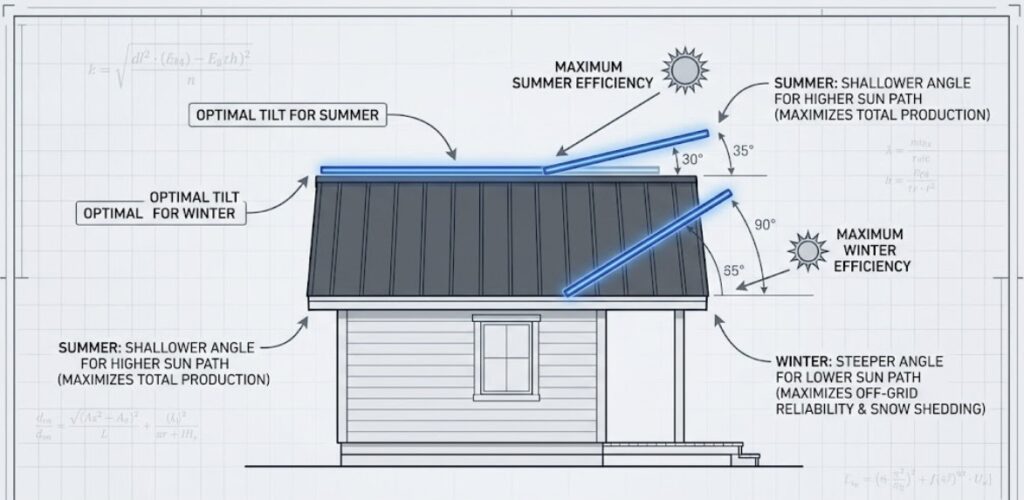
Typical tilt recommendations:
| Season | Tilt Angle |
|---|---|
| Summer | Latitude − 10° |
| Winter | Latitude + 10° |
| Year Round | Latitude |
Shade Management and Partial Shading Optimization
Even small shadows can reduce solar production dramatically.
A single shaded panel may reduce output by 30% to 70%.
Common shading problems:
- Trees
- Roof vents
- Chimneys
- Snow buildup
- Nearby terrain
Micro Cabin Solar Panel Layout Strategy
Best layout practices:
- Spread panels instead of stacking
- Use separate MPPT inputs when possible
- Avoid series-only wiring in shaded environments
Micro-Inverters vs MPPT Controllers for Small Cabins
Micro-inverters are becoming more common in 2026 micro cabin builds.
Comparison:
| Technology | Best For |
|---|---|
| MPPT Controller | Small systems |
| Micro Inverter | Shaded locations |
| Hybrid Inverter | Expandable systems |
Battery Sizing for Solar Setup for Micro Cabin
Battery capacity determines how long power lasts without sunlight.
Battery Capacity Formula
Daily usage × Days of autonomy = Battery capacity
Example:
1 kWh daily × 2 days backup = 2 kWh battery bank
Recommended backup:
- Weekend cabin: 1-2 days
- Off-grid living: 2-3 days
Battery Temperature Performance and Cold Climate Optimization
Battery performance drops significantly in cold environments, which is common for micro cabins.
Temperature impacts:
| Temperature | Battery Capacity |
|---|---|
| 77°F (25°C) | 100% |
| 50°F (10°C) | 80% |
| 32°F (0°C) | 60% |
| 14°F (-10°C) | 40% |
Cold climate cabins require special planning. We discuss specific heating solutions and insulation for these environments in our [advanced retreat cabin design strategies].
Best Batteries for Cold Weather Micro Cabins
Recommended battery types:
- LiFePO4 with internal heater (Best 2026 option)
- AGM batteries (Good cold performance)
- Gel batteries (Moderate cold tolerance)
Avoid:
- Standard lithium batteries without heaters
- Flooded batteries in freezing conditions
If your micro cabin is in a climate where temperatures drop below 32°F (0°C), standard lithium batteries will fail to charge. I strongly recommend the [LiTime 12V 100Ah Self-Heating Battery]. It features an internal heating pad that uses a tiny bit of solar power to warm the cells before charging begins. It’s the only way to ensure your lights stay on during a mountain winter without babysitting your system.
Check current price on Amazon –>
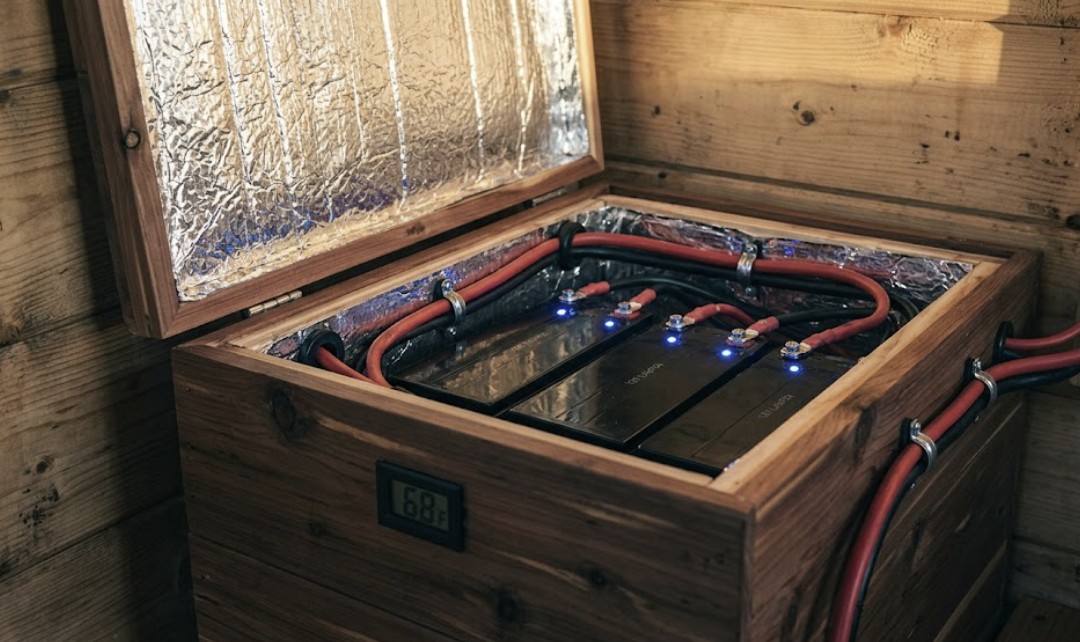
Battery Placement Strategies
Best battery placement:
- Inside insulated cabin space
- Under bench seating
- Inside insulated battery box
- Utility closet
Avoid:
- Outdoor sheds
- Unheated crawlspaces
- Roof-mounted enclosures
Wiring Safety for Micro Cabin Solar Systems
Low voltage systems still require proper wiring.
Important considerations:
- Use copper wiring only
- Install fuses on all circuits
- Use DC-rated breakers
- Keep cable runs short
- Increase wire size for long distances
Example Wire Guide:
| Distance | Recommended Wire |
|---|---|
| Under 20 ft | 10 AWG |
| 20-50 ft | 8 AWG |
| Over 50 ft | 6 AWG |
Proper circuit protection and cable sizing are critical for DIY safety. We highly recommend reviewing [Victron Energy’s Wiring Unlimited] guide for professional-grade electrical standards.
Grounding a Solar Setup for Micro Cabin
Proper grounding protects equipment and reduces lightning risk.
Grounding components:
- Solar panel frame
- Mounting structure
- Charge controller
- Inverter
- Battery bank
Install:
- Copper ground rod
- Ground wire to electrical panel
- Ground from solar array
12V vs 24V vs 48V Micro Cabin Solar Systems
Choosing voltage improves system efficiency. For a technical breakdown on how higher voltage prevents energy waste, check out our guide on [why 24V off-grid solar systems are best for cabins].
| System | Best Use |
|---|---|
| 12V | Small micro cabins |
| 24V | Medium systems |
| 48V | Full off-grid homes |
Most solar setup for micro cabin installations use 12V or 24V systems.
Choosing the right voltage is a foundational decision. See the full [12V vs 24V vs 48V solar system] comparison to decide if you should upgrade.
Solar Setup for Micro Cabin Installation Steps
Step-by-Step Installation
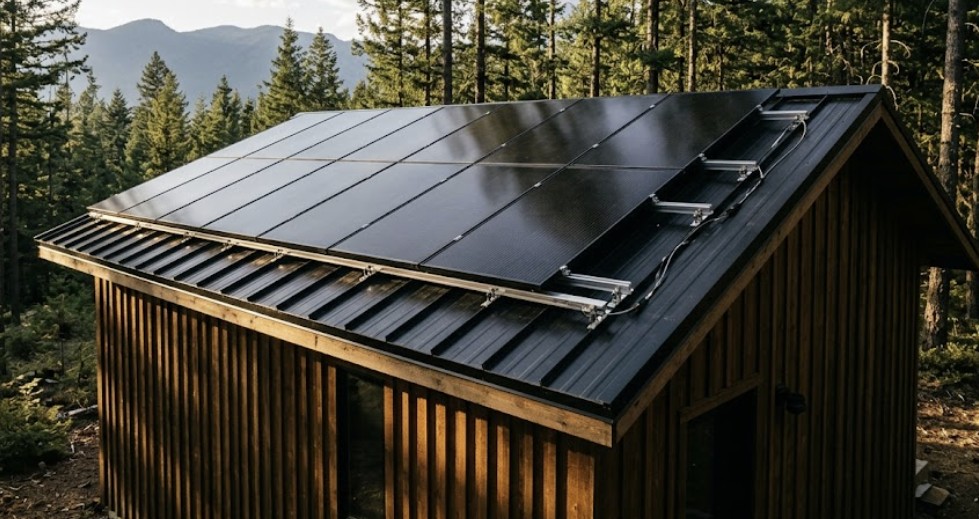
1. Mount Solar Panels
- Roof mount
- Ground mount
- Pole mount
Read our full [ground mount vs roof mount solar] comparison for details.
2. Install Charge Controller
- Mount near battery bank
- Connect solar input
- Connect battery output
Choosing between [Victron vs Renogy charge controllers] will determine how much power you actually harvest during cloudy days.
3. Connect Battery Bank
- Series or parallel wiring
- Install fuse protection
- Ensure correct polarity
4. Install Inverter
- Connect to battery bank
- Connect AC distribution panel
5. Test System
- Check voltage
- Confirm wiring
- Test load
Solar Combiner Boxes for Micro Cabin Systems
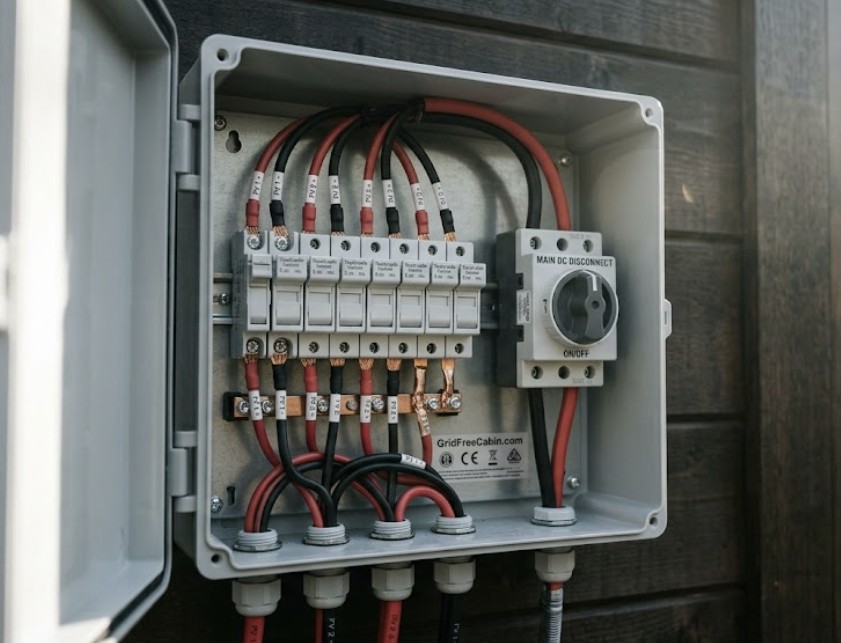
When using multiple solar panels, combiner boxes simplify wiring and improve safety.
Benefits:
- Cleaner installation
- Reduced wire runs
- Fuse protection for each panel
- Easier maintenance
Typical combiner box features:
- DC circuit breakers
- Weatherproof enclosure
- Grounding bus
- Surge protection
When You Need a Combiner Box
Use combiner box when:
- 3 or more solar panels
- Long wire runs
- Ground-mounted arrays
- Expandable system design
Solar Setup for Micro Cabin With Inverter (24/7 Power)
Adding an inverter allows powering:
- Small refrigerator
- Coffee maker
- Laptop
- Lighting
- Water pump
For full-time use, recommended inverter sizes:
| Use Case | Inverter |
|---|---|
| Basic Cabin | 600W |
| Medium Cabin | 1000W |
| Full-time Cabin | 2000W |
Micro Cabin Solar System Example Configurations
Small Weekend Micro Cabin
- 300W Solar Panels
- 200Ah Battery
- 600W Inverter
- 20A Charge Controller
Medium Micro Cabin
- 800W Solar Panels
- 400Ah Battery
- 1500W Inverter
- 40A MPPT Controller
Full-Time Off-Grid Micro Cabin
- 2000W Solar Panels
- 600Ah Lithium Battery
- 3000W Inverter
- 60A MPPT Controller
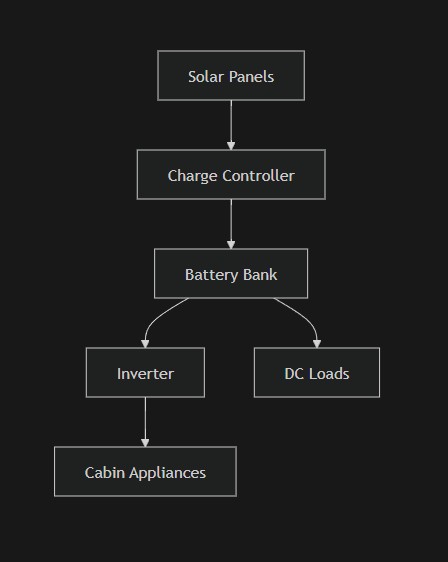
Solar Setup for Micro Cabin Diagram
Micro Cabin Solar Monitoring and Smart Energy Management
Smart monitoring improves performance and battery lifespan.
Modern systems include:
- Mobile app monitoring
- Battery health tracking
- Solar production analytics
- Remote shutdown capability
Benefits of Solar Monitoring
- Prevent battery damage
- Detect wiring issues
- Track energy usage
- Optimize solar production
This is especially useful for remote cabins visited occasionally.
Micro Cabin Appliances That Work Best With Solar
Recommended low-energy appliances:
- LED lighting
- 12V refrigerator
- USB charging outlets
- Propane cooking appliances
- 12V water pump
Avoid:
- Electric heaters
- Air conditioners (unless large system)
- Electric stoves
High-Efficiency Appliances Designed for Micro Cabin Solar Systems
Choosing efficient appliances reduces system cost dramatically.
When shopping for refrigerators or electronics, always look for the [Energy Star Certification] to ensure the lowest possible idle power consumption.
To make a small 400W solar setup feel like a 1000W system, you must eliminate inverter waste. The [BougeRV 12V Portable Fridge] is a game-changer for micro cabins. By running directly off your DC bus, you skip the 15% energy loss of an inverter. It consumes less than 1kWh per day, allowing you to have cold beer and fresh food even on cloudy weekend retreats.
Check current price on Amazon –>
Best Appliances for Solar Setup for Micro Cabin
Recommended:
- 12V compressor refrigerators
- Low-watt LED lighting
- Laptop instead of desktop
- Propane hot water heaters
- DC ceiling fans
Energy consumption comparison:
| Appliance | Standard | Efficient |
|---|---|---|
| Refrigerator | 1200Wh/day | 350Wh/day |
| Lighting | 400Wh/day | 80Wh/day |
| TV | 200Wh/day | 70Wh/day |
Using efficient appliances reduces solar system size by 40-60%.
Solar Setup for Micro Cabin Cost Estimate
Typical price ranges:
| System Size | Cost |
|---|---|
| Small | $800-$1,500 |
| Medium | $1,500-$3,500 |
| Large | $3,500-$8,000 |
Lithium batteries increase upfront cost but reduce long-term expenses.
While micro systems are cheaper, a full-time residence requires more investment. See the [solar panels for tiny home cost] breakdown for larger 3kW-5kW systems.
2026 Solar Panel Efficiency Improvements for Micro Cabins
Modern panels in 2026 are significantly more efficient.
Typical efficiencies:
| Panel Type | Efficiency |
|---|---|
| Polycrystalline | 16% |
| Monocrystalline | 20% |
| PERC Panels | 21% |
| TOPCon Panels | 22-23% |
| Bifacial Panels | 23-25% |
TOPCon and bifacial panels are now preferred for solar setup for micro cabin installations.
For a technical breakdown of how solar cell efficiency has reached these new peaks in 2026, refer to the latest [NREL Best Research-Cell Efficiency Chart].
Why Bifacial Panels Are Ideal for Micro Cabins
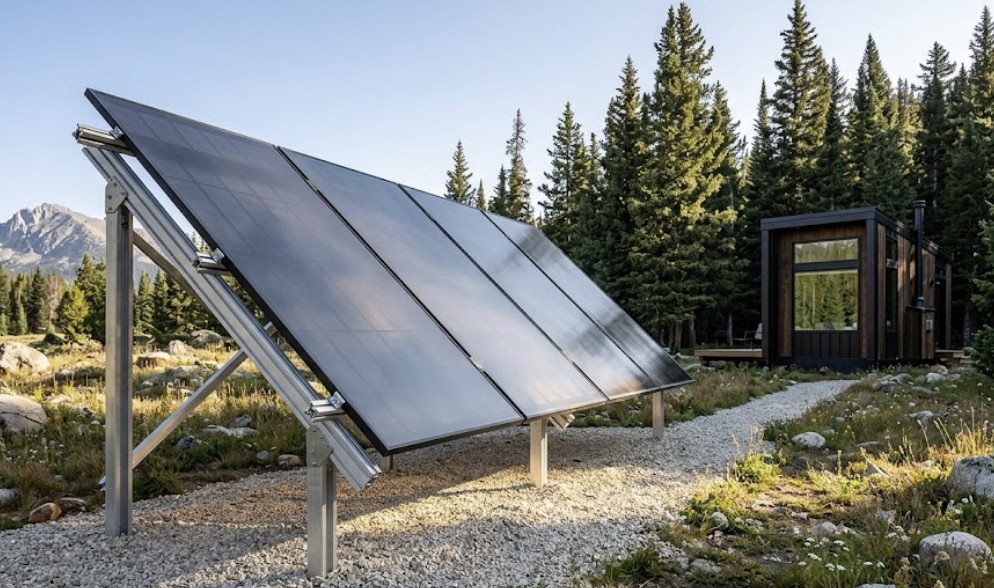
Bifacial panels generate power from:
- Front sunlight
- Ground reflection
- Snow reflection
I recommend the [Renogy 200W Bifacial Panels]. Because they capture reflected light from the back side (especially effective if you have snow or light-colored gravel around your cabin), you can get up to 240W of actual performance from a 200W footprint. It’s the smartest way to over-provision your energy without adding more bulk.
Check current price on Amazon –>
Benefits:
- 10-20% higher output
- Better winter production
- Ideal for ground-mounted cabins
Maintenance for Micro Cabin Solar Systems
Minimal maintenance required:
- Clean panels 2-3 times yearly
- Check wiring annually
- Monitor battery voltage
- Inspect mounting hardware
Expandability of Solar Setup for Micro Cabin
A properly designed system allows expansion:
- Add more solar panels
- Increase battery capacity
- Upgrade inverter
Plan for expansion from the beginning.
If you plan to scale your micro-living space into a larger permanent residence, see our roadmap for [400 sq ft cabin power requirements] to ensure your core components are ready for the upgrade.
Future-Proofing Your Micro Cabin Solar System
A scalable system prevents costly redesigns later.
Future-proofing strategies:
- Oversize charge controller
- Use expandable battery systems
- Install larger wire sizes
- Leave roof space for expansion
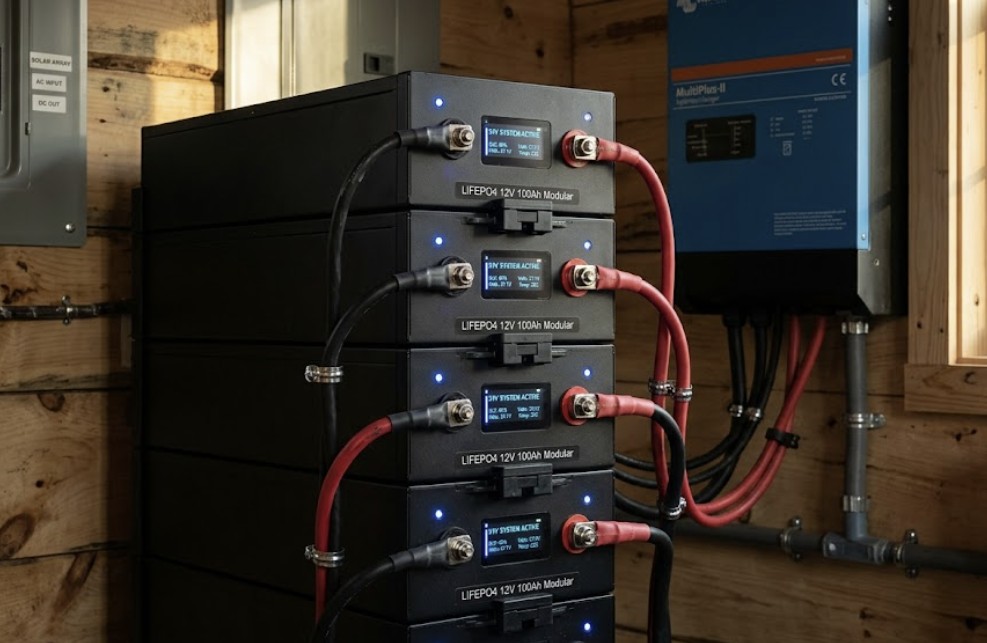
Modular Lithium Battery Systems (2026 Trend)
Modern battery systems:
- Stackable lithium batteries
- Plug-and-play expansion
- Smart monitoring apps
- Built-in BMS protection
Benefits:
- Easy upgrades
- No rewiring required
- Long lifespan
Best Solar Setup for Micro Cabin: Final Recommendations
For most micro cabins:
Recommended baseline system:
- 600W Solar Panels
- 400Ah Battery Bank
- 1500W Pure Sine Inverter
- MPPT Charge Controller
This setup powers:
- Lights
- Laptop
- Small fridge
- Water pump
- Phone charging
Conclusion
A well-planned solar setup for micro cabin delivers reliable, quiet, and independent power for remote living. By properly sizing solar panels, batteries, and wiring, micro cabin owners can enjoy continuous electricity with minimal maintenance and long-term cost savings.
Whether building a weekend retreat or full-time off-grid home, a properly designed solar system ensures energy independence and sustainable living for years to come.
How many solar panels do we need for a micro cabin?
Most micro cabins only need a small number of solar panels. A simple weekend cabin with lights and phone charging usually works well with 200 to 400 watts of solar panels. If we add a refrigerator, water pump, or more electronics, the system typically increases to 600 to 1,000 watts. Full-time micro cabin living often requires 1,500 watts or more. It is usually better to install slightly more solar capacity than required so the system performs well during cloudy weather and winter months.
Can we run a refrigerator on a solar setup for micro cabin?
Yes, running a refrigerator is very common in a micro cabin solar system. However, choosing an energy-efficient model is important. Solar-friendly 12V or high-efficiency refrigerators use much less electricity and allow us to keep the solar system smaller and more affordable. Standard household refrigerators can still work, but they require more solar panels and larger batteries to run reliably.
Is it better to use a 12V, 24V, or 48V system for a micro cabin?
Small micro cabins usually work best with 12V systems because they are simple and affordable. Medium-sized micro cabins benefit from 24V systems since they improve efficiency and reduce wiring losses. Larger cabins or full-time off-grid setups often use 48V systems because they handle higher power loads more efficiently. Most micro cabin owners choose either 12V or 24V depending on system size.
Can we install a solar setup for micro cabin ourselves?
Yes, many micro cabin solar systems are designed for DIY installation. Modern solar kits include pre-wired components, making installation easier than ever. As long as we follow proper safety practices, use correct wire sizes, and install fuses and grounding, a DIY solar setup is very achievable. Larger systems or complex installations may still benefit from professional assistance.
How long does a solar setup for micro cabin last?
A solar setup for micro cabin is a long-term investment. Solar panels typically last 25 years or more and require very little maintenance. Lithium batteries often last 10 to 15 years depending on usage. Inverters and charge controllers usually last around 10 years. With proper installation and maintenance, a micro cabin solar system can provide reliable off-grid power for decades.
11 thoughts on “Solar Setup for Micro Cabin: Complete Off-Grid Power Guide (Design, Sizing, Wiring & Installation)”