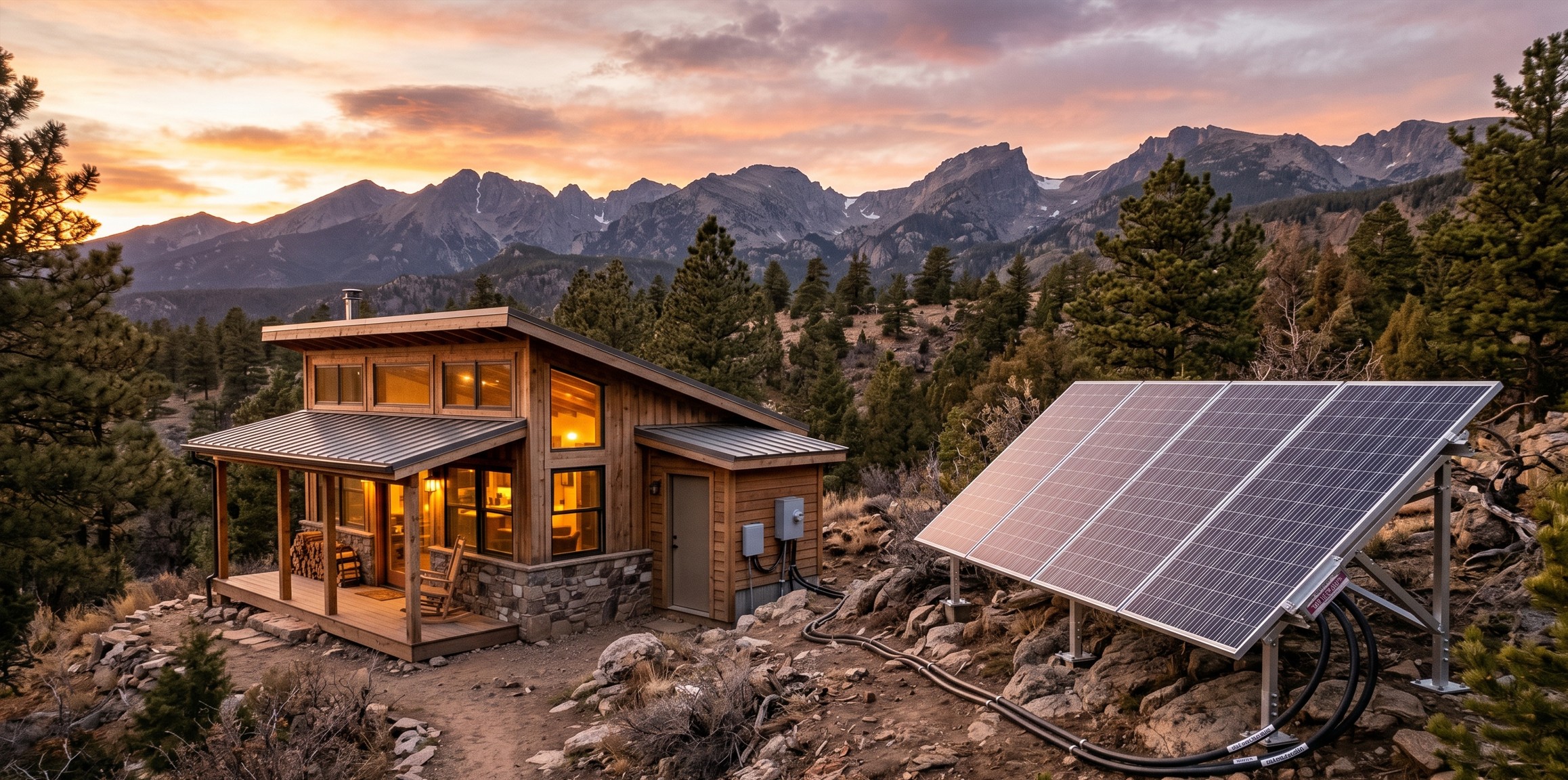
If you’re building an off-grid cabin, tiny house, homestead, or remote workshop, one of the most important decisions you’ll make is choosing the right 24V off grid solar system.
If you’re in the early stages, pair this voltage choice with our [Complete Off-Grid Retreat Cabin Blueprint].
Should you build a 12V, 24V, or 48V solar system? You can see how it compares to other options in our [12V vs 24V vs 48V solar system] engineering guide.
Most beginners default to 12V systems — but in real-world off-grid cabin installations, 24V off grid solar systems often deliver significantly better performance, especially when you’re dealing with:
- Long wire runs
- Limited solar hours
- High-draw appliances
- Battery efficiency concerns
- Future system expansion
In this DIY technical guide, we’ll break down:
- Why 24V reduces line loss
- Real-world efficiency differences
- Wire size comparisons (AWG)
- Cabin-specific installation advantages
- When to use Victron Energy vs Renogy
- 12V vs 24V vs 48V system comparisons
- Example off-grid cabin setups
By the end, you’ll understand why 24V is often the sweet spot for off-grid cabins.
Table of Contents
Understanding Off-Grid Solar Voltage (12V vs 24V vs 48V)
Off-grid solar systems typically operate at one of three battery voltages:
| System Voltage | Best For | Complexity | Efficiency |
| 12V | RVs, vans, small cabins | Easy | Lowest |
| 24V | Cabins, small homes | Moderate | High |
| 48V | Large homes, full off-grid | Advanced | Highest |
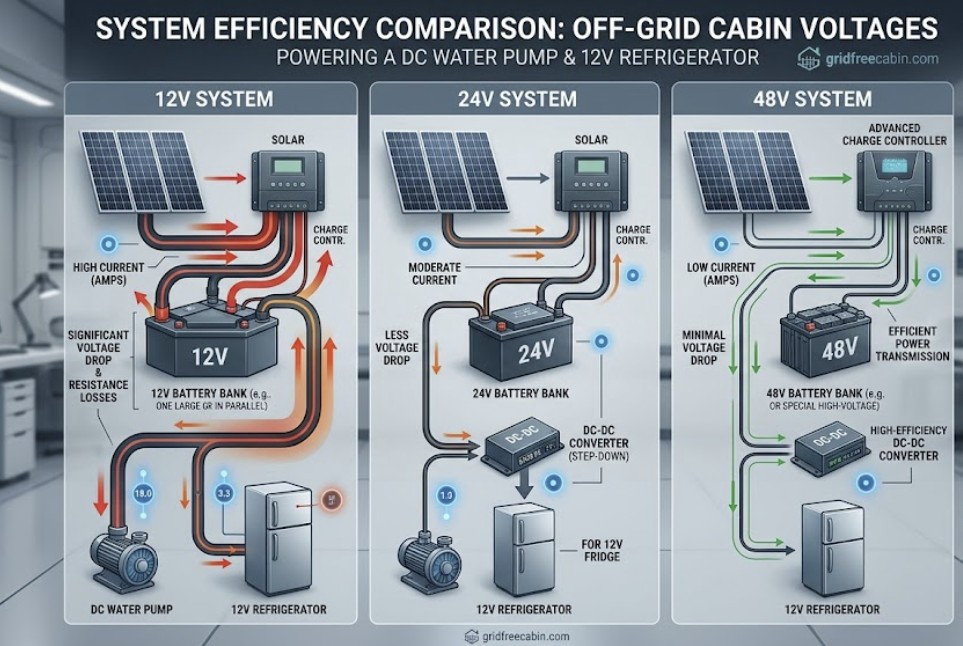
For most off-grid cabins, 24V hits the perfect balance between:
- Cost
- Efficiency
- Simplicity
- Expandability
The Real Reason 24V Systems Perform Better: Reduced Line Loss
The biggest technical advantage of a 24V off grid solar system is reduced line loss.
This matters especially in:
- Cabins
- Remote solar arrays
- Ground-mounted panels
- Battery sheds
- Long wire runs
The Electrical Reality: Voltage vs Current
Power is calculated using:
Watts = Volts × Amps
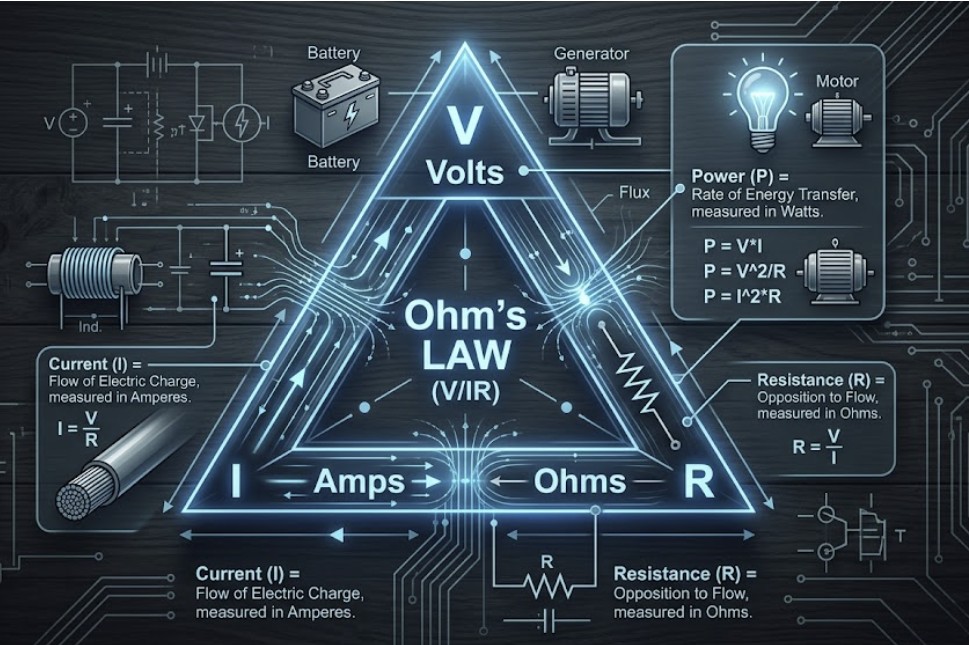
If you double voltage, you cut current in half.
Example:
Running a 1200-watt load:
| System | Voltage | Current |
| 12V | 12V | 100 amps |
| 24V | 24V | 50 amps |
| 48V | 48V | 25 amps |
Lower current =
- ✅Less heat
- ✅Lessvoltage drop
- ✅Smaller wire size
- ✅Better efficiency
- ✅Safer system
This is why 24V systems outperform 12V systems in cabins.
Voltage Drop: The Hidden Power Killer in Cabins
Voltage drop occurs when power travels through wire. The longer the run, the more power is lost.
Cabins commonly have:
- Panels 30-100 feet away. Planning to conceal your panels far from the structure for security? Consult our [Stealth Cabin Installation Strategies].
- Battery banks in separate rooms
- Inverter located centrally
These longer distances penalize 12V systems heavily.
Example: 50-Foot Cable Run
1200-watt load:
| 12V System | 24V System | 48V System |
| 100 amps Requires 2/0 AWG wire Significant heat loss Expensive cable | 50 amps Requires 4 AWG wire Much lower loss Cheaper cable | 25 amps Requires 10 AWG wire Minimal loss |
- This is why a 24V off grid solar system is ideal for cabins.
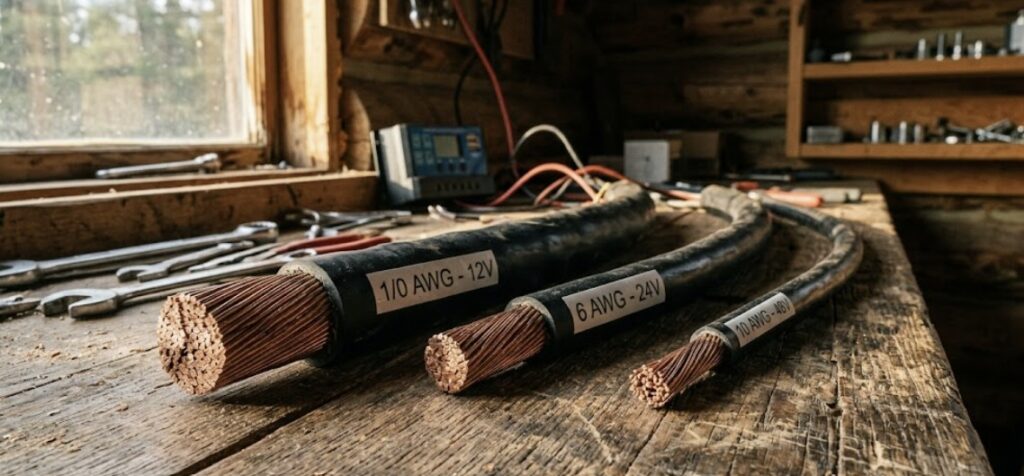
You reduce:
- ✅Copper costs
- ✅Installation complexity
- ✅Fire risk
- ✅Energy loss
Why 12V Systems Struggle in Real Cabin Applications
12V systems work great for:
- Vans & Boats: Small, mobile setups.
- Tiny power needs: Just a couple of lights
But they struggle when running:
- Refrigerators: High startup surge.
- Well pumps & Microwaves: Massive current draw.
Because current becomes extremely high.
As a example, running a 1500W microwave:
| 12V system | 24V system |
| 1500W ÷ 12V = 125 amps | 1500W ÷ 24V = 62.5 amps |
| This creates: Voltage sag inverter strain, battery drain, heat buildup | Much more manageable. |
Why 24V Is the Sweet Spot for Off-Grid Cabins
24V off grid solar system offer:
| Lower Line Loss | Smaller Wire Size | Better Performance |
| Texto: Reduced amperage leads to faster charging and zero wasted energy | Use thinner (AWG) cables. Easier to install and much cheaper to buy. | Texto: Inverters like Victron MultiPlus run cooler and more efficiently at 24V. |
- Example: The Victron Energy MultiPlus 24/3000 is the industry standard for 24V cabins. It offers higher efficiency, lower idle consumption, and superior surge capability compared to 12V models.
Example 24V off grid solar system (Realistic DIY Setup)
Typical 24V cabin system:
| Solar Panels | Charge Controller |
| 4 × 400W panels 1600W total | Victron Energy SmartSolar MPPT 100/50 Renogy Rover 60A MPPT |
| Battery Bank | Inverter |
| 24V 200Ah Lithium OR 2 × 12V 200Ah batteries in series | Victron Energy MultiPlus 24/3000 Renogy 24V 3000W inverte |
This system easily powers:
- ✅Refrigerator
- ✅Lights
- ✅Laptop
- ✅TV
- ✅Well pump
- ✅Microwave (intermittent)
Not sure how many panels you actually need? Use our [Daily Cabin Power Sizing Guide].
Perfect for off-grid cabins.
Wiring Batteries for 24V (Simple Explanation)
Creating 24V is simple:
Use two 12V batteries:
- Connect positive to negative
- Remaining terminals become 24V output
This is called series wiring.
Pro Tip for Battery Longevity: While you can wire two 12V batteries in series, I strongly recommend using a single [LiTime 24V 230Ah Lithium Unit]. Using one 24V battery instead of two 12V units eliminates the risk of “voltage drift” between batteries, which is the #1 cause of premature failure in DIY banks. This single unit provides 5.12kWh of energy—enough to run a high-efficiency cabin fridge for 3 days without sun.
Check current price on Amazon –>
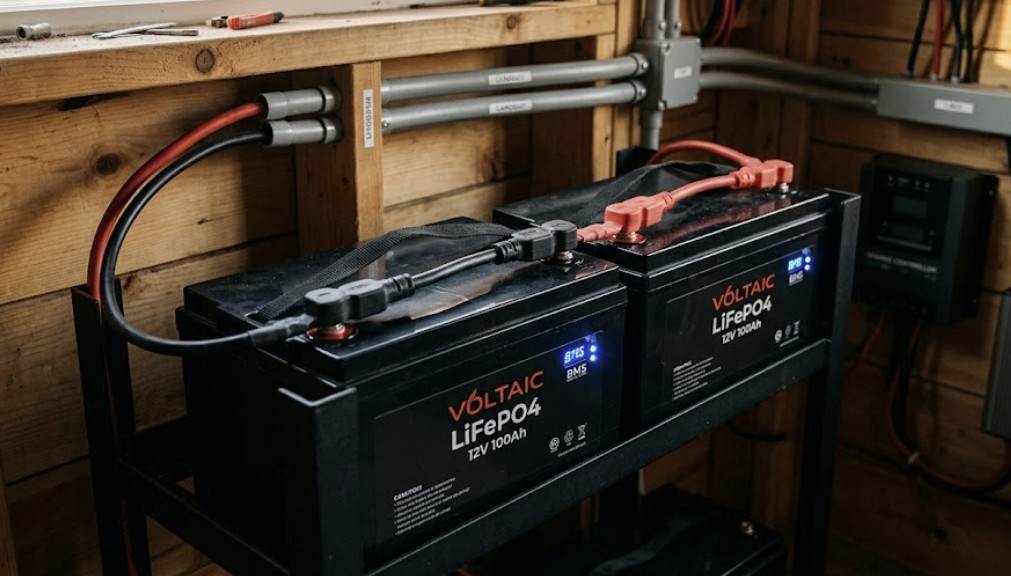
All you have to do is connect the Battery1 + to the Battery2 – and the remaining terminals Battery1 – and Battery2 + become 24V
For a visual representation of how to connect your components, see our [24V solar system wiring diagram].
Why 24V Batteries Last Longer
| Lower current reduces | This often results in | Especially true with |
| Heat buildup Internal resistance losses Battery stress | Longer battery life Better depth of discharge performance Improved charge efficiency | Lithium batteries AGM batteries LiFePO4 systems |
To get the most out of your high-voltage setup, you need to pick the [best solar battery for cabin] brands that support smart BMS communication.
Real-World Cabin Scenario: 12V vs 24V
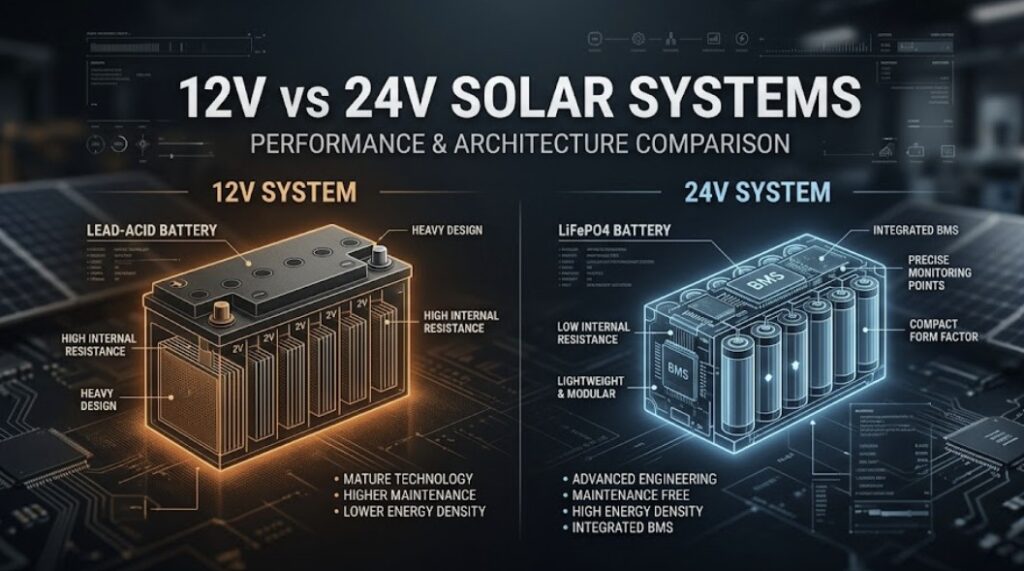
| Small Cabin Load: | Fridge: 120W Lights: 40W Laptop: 80W Water pump: 400W surge | Total: ~640W peak |
| 12V System | 24V System |
| ~53 amps Heavy wiring Voltage drop risk | ~27 amps Efficient Stable |
This is why many experienced off-grid builders upgrade to 24V after starting with 12V.
In a standard [400 sq ft cabin power setup], the efficiency gains of 24V can save you hundreds of dollars in heavy-gauge copper wiring alone.
24V vs 48V: Why Not Just Go 48V?
| 48V is excellent but: | More expensive components Harder DIY setup Overkill for small cabins |
| 48V makes sense when: | Running full off-grid homes Large battery banks 5kW+ systems |
For most cabins, a 24V off grid solar system is the ideal choice.
Example Victron Energy 24V Cabin Setup
Recommended components:
| Solar | Charge Controller | Battery | Inverter | Monitoring |
| 4 × 400W panels | Victron SmartSolar 100/50 | 24V 200Ah LiFePO4 | Victron MultiPlus 24/3000 | Victron Cerbo GX |
If you are building for 24V, do not settle for a standalone inverter. I always specify the [Victron MultiPlus 24/3000]. It is an inverter and a high-speed battery charger in one unit. Its real value in a cabin is the “PowerAssist” feature—if your well pump surges, the MultiPlus can temporarily supplement your battery power to prevent a system shutdown. It runs significantly cooler at 24V than its 12V counterpart, ensuring a 15-20 year lifespan.
Check current price on Amazon –>
Example Budget Renogy 24V Cabin Setup
| Panels | Charge Controller | Battery | Inverter |
| Renogy 200W × 6 | Renogy Rover 60A MPPT | Renogy 24V lithium | Renogy 24V 3000W |
Great for: Budget DIY cabins, small homesteads, weekend cabins
Why Cabins Benefit Most from 24V
Cabins often have:
- Long wire runs
- Limited solar production
- Battery-only nights
- Cold weather
24V improves:
- Charging speed
- Efficiency
- Reliability
Especially important during:
- Winter
- Cloudy days
- High-draw appliance use
Fire Safety Benefits of 24V off grid solar systems
Lower current reduces:
- Cable heating
- Loose connection risk
- Terminal overheating
This improves:
- System safety
- Reliability
- Longevity
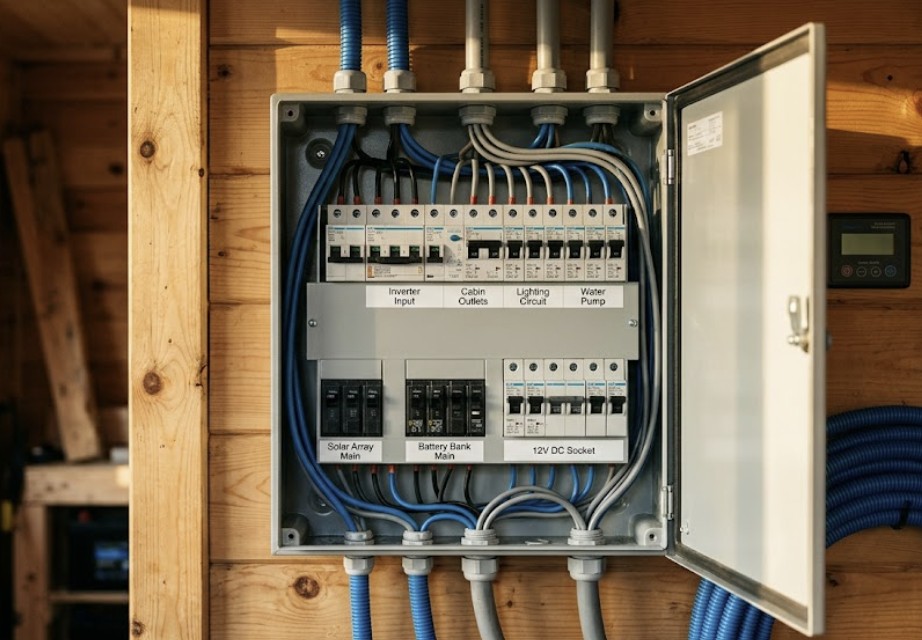
Important for remote cabins.
Future-Proofing Your Cabin Solar System
Starting with 24V allows:
- Add panels later
- Upgrade battery bank
- Install larger inverter
Without rewiring everything.
12V systems often require complete rebuilds.
My Recommended 24V Starter Cabin System
| Small Cabin: | Medium Cabin | Full-Time Cabin |
| 800W panels 24V 100Ah battery 2000W inverter | 1600W panels 24V 200Ah battery 3000W inverter | 2400W panels 24V 400Ah battery 4000W inverter |
When 12V Still Makes Sense
Use 12V if:
- Very small system
- RV or van
- Under 500W load
You can find specific 12V wiring diagrams in our [micro cabin solar power guide].
Otherwise:
Choose 24V.
Real-World Example: The 600 sq ft Mountain Cabin Setup
To really understand why 24V off grid solar systems outperform 12V setups, let’s look at a realistic 600 sq ft mountain cabin installation. This is the type of system many DIY builders install in remote locations where efficiency, reliability, and reduced line loss are critical.
This example assumes:
- 600 sq ft off-grid cabin
- 2–4 occupants (weekend or part-time full-time use)
- Remote mountain location
- Limited winter sunlight
- Ground-mounted solar array (50–75 feet from cabin)
This is exactly the scenario where 24V systems shine.
System Overview: 600 sq ft Mountain Cabin
This system was designed to power:
- Full-size Energy Star refrigerator
- LED lighting throughout cabin
- Laptop and phone charging
- Wi-Fi router
- Small well pump
- Microwave (short use)
- TV and streaming device
- Occasional power tool use
This is a typical off-grid cabin power profile.
Solar Array
Solar Panel Configuration
- 4 × 400W Monocrystalline Panels
- Total Solar Capacity: 1600 Watts
- Wired as 2S2P (Series-Parallel) for 24V System
- Ground-mounted rack 60 feet from cabin
Using series wiring helps:
- Reduce voltage drop
- Improve MPPT controller performance
- Increase efficiency during cloudy conditions
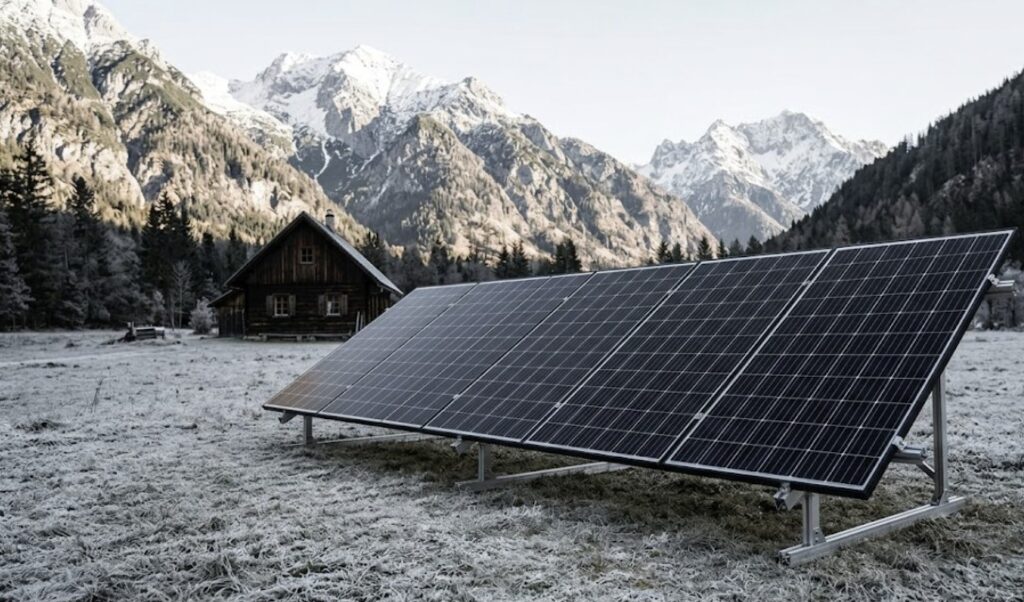
Why Ground Mount Matters for Cabins
Most cabins benefit from ground-mounted panels because:
- Easier snow removal
- Adjustable tilt for winter
- Better sun positioning
- Easier maintenance
However, ground mounts usually mean longer cable runs, which is where 24V systems dramatically reduce line loss.
For this installation:
- Distance to cabin: 60 feet
- Total wire run (round trip): 120 feet
This would be problematic on a 12V system.
But with a 24V off grid solar system, voltage drop stays manageable.
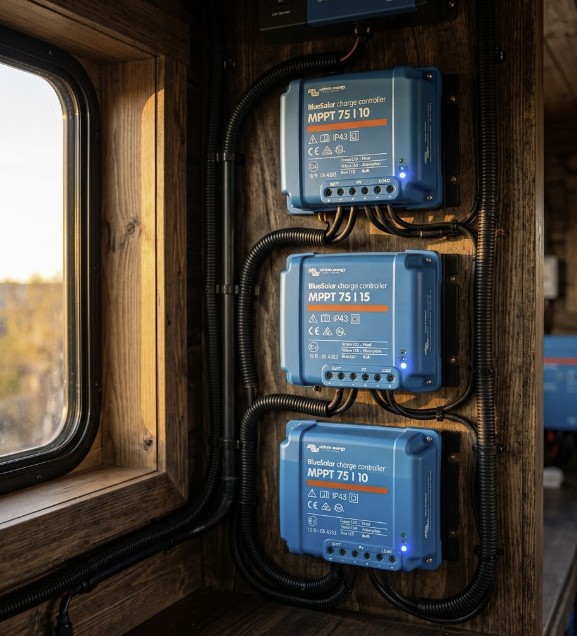
Charge Controller
This setup uses:
Victron Energy SmartSolar MPPT 100/50
The Architect’s Favor: Don’t fly blind. While there are cheaper options, I always specify the SmartSolar 100/50 because of its built-in Bluetooth. In a remote cabin, being able to check your battery health and solar harvest from your phone—without having to walk out to a cold battery shed in the middle of the night—is a game changer for system maintenance.
Check current price on Amazon –>
- High efficiency (up to 98%)
- Bluetooth monitoring
- Excellent low-light performance
- Ideal for a 24V off grid solar system
Alternative Budget Option:
Renogy Rover 60A MPPT Controller
Both are excellent for small-to-medium off-grid cabins.
Battery Bank
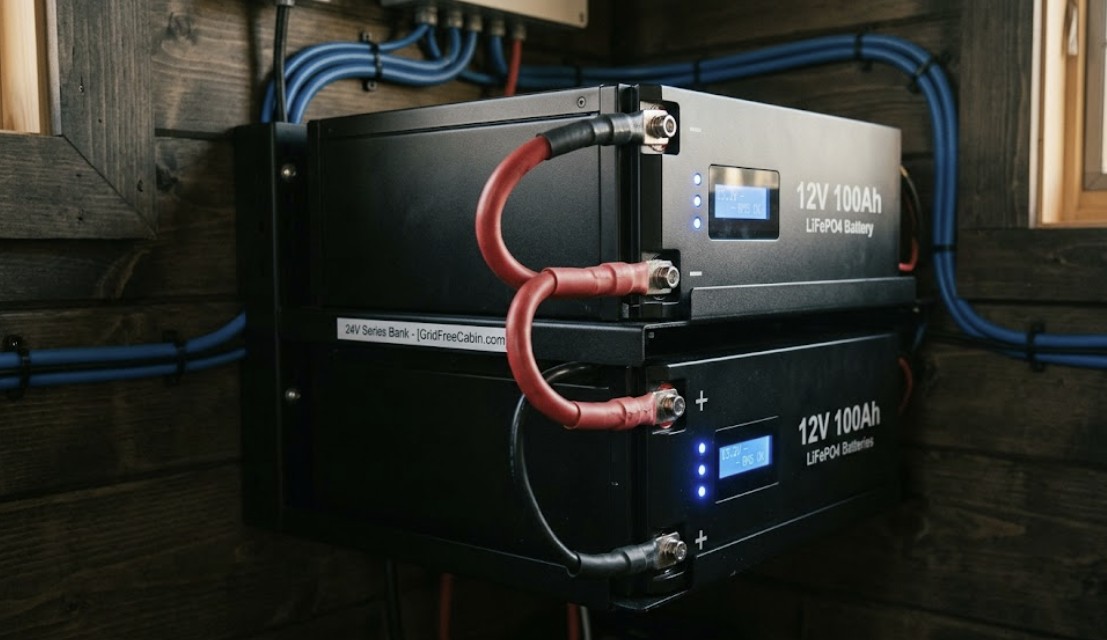
Battery Configuration:
- 2 × 12V 200Ah LiFePO4 Batteries
- Wired in series for 24V
- Total Storage: 24V 200Ah (4.8kWh usable)
This battery bank provides:
- 1–2 days autonomy
- High efficiency
- Long lifespan (4000+ cycles)
Lithium batteries perform especially well in 24V configurations because:
- Lower current draw
- Reduced heat
- Better discharge efficiency
Inverter Selection
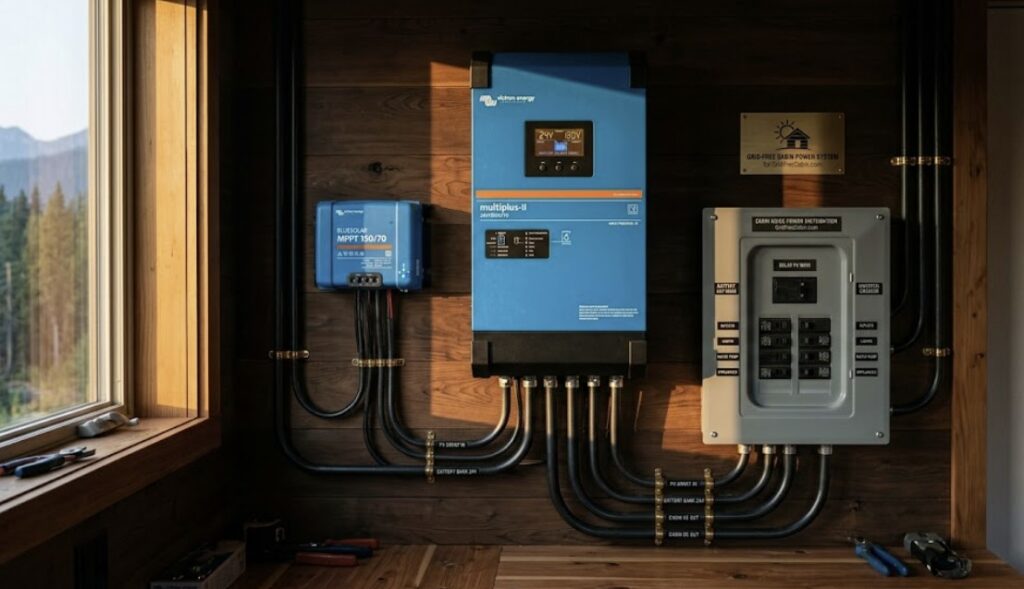
This cabin uses:
Victron Energy MultiPlus 24/3000
Key Features:
- 3000W continuous power
- 6000W surge capacity
- Pure sine wave
- High efficiency
Budget Alternative:
Renogy 24V 3000W Pure Sine Wave Inverter
Both handle:
- Refrigerator startup surge
- Pump surge
- Microwave use
Wiring Setup and Cable Sizes (AWG)
Here’s where a 24V off grid solar system really show their advantage.
Solar Panels to Charge Controller
- Distance: 60 feet
- Voltage: ~70V (series panels)
- Wire Size: 10 AWG
This is affordable and easy to run.
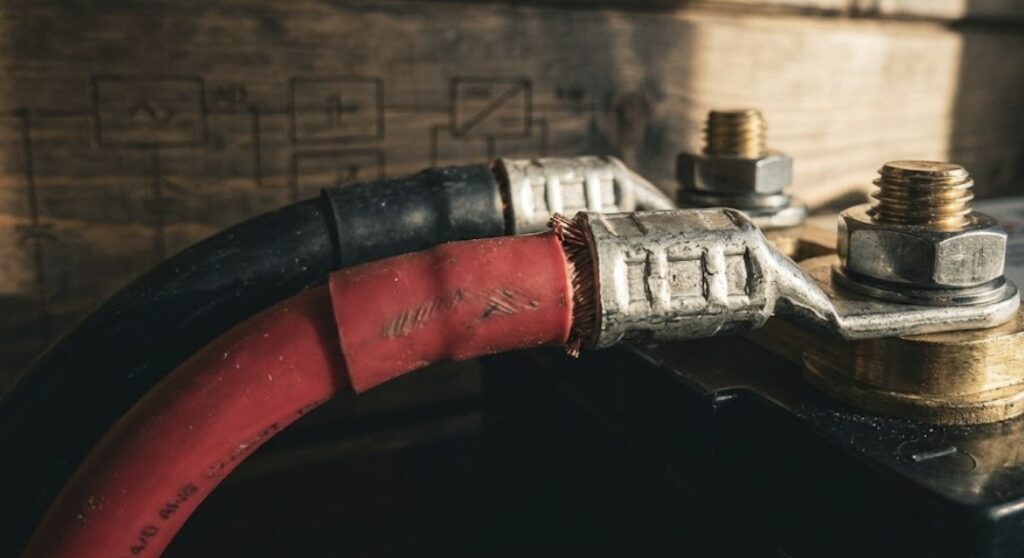
Battery to Inverter
- Distance: 4 feet
- Current: ~125 amps max
- Wire Size: 2/0 AWG
This is standard for a 24V off grid solar system.
What If This Was 12V?
Same 3000W inverter:
12V current:
3000W ÷ 12V = 250 amps
This would require:
- 4/0 cable
- Expensive wiring
- Greater heat
- Higher voltage drop
This is why a 24V off grid solar system is ideal for cabins.
Typical Daily Power Usage
Example Daily Load:
| Appliance | Watts | Hours | Watt-Hours |
| Refrigerator | 120W | 8 | 960Wh |
| Lights | 40W | 5 | 200Wh |
| Laptop | 60W | 4 | 240Wh |
| Router | 10W | 4 | 240Wh |
| Router | 10W | 24 | 240Wh |
| TV | 80W | 3 | 240Wh |
| Misc | — | — | 200Wh |
Total Daily Use:
~2,080Wh per day
1600W solar array easily supports this.
Real-World Performance
This 24V system provides:
- Reliable winter operation
- Faster battery charging
- Reduced cable heating
- Lower energy loss
Even during cloudy days:
- System still charges
- Batteries discharge slower
- Inverter runs cooler
These are real-world benefits of a 24V off grid solar system.
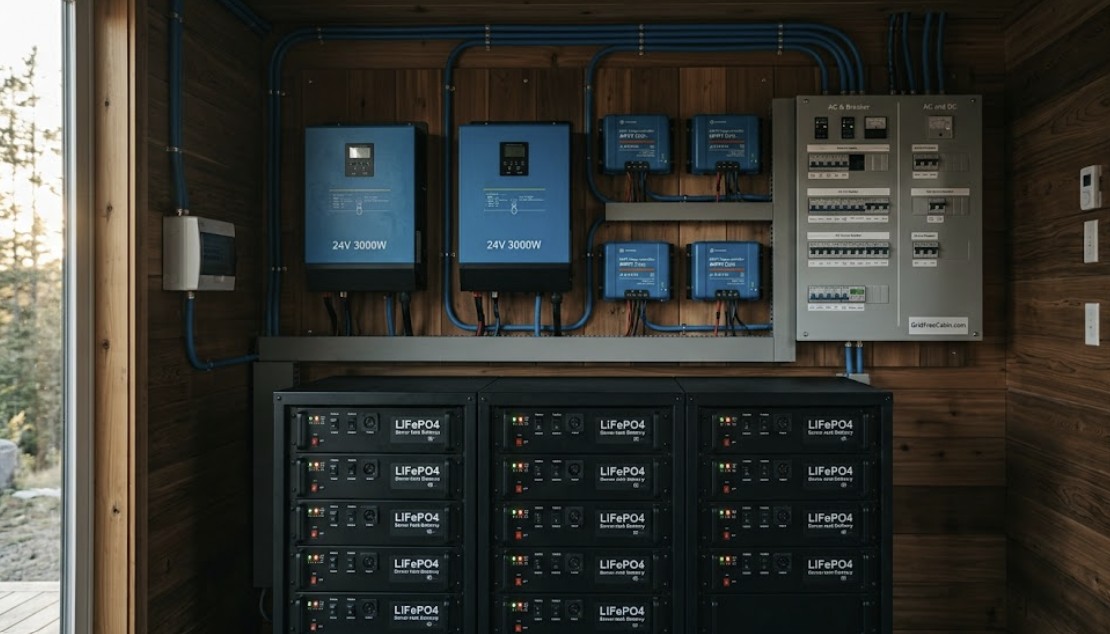
Power Wall Layout
Typical cabin power wall includes:
- Solar disconnect
- Charge controller
- Battery bank
- Inverter
- Breaker panel
This keeps wiring:
- Organized
- Safe
- Expandable
Expansion Potential
This 24V off grid solar system allows easy upgrades:
Add:
- More solar panels
- Additional batteries
- Larger inverter
Without redesigning system.
This is why 24V systems are future-proof.
To plan your growth from a weekend getaway to a permanent residence, review our [3-Phase Expansion Roadmap].
Why This Setup Works So Well
This 600 sq ft mountain cabin benefits from:
- ✔ Reduced line loss
- ✔ Efficient battery charging
- ✔ Smaller wire sizes
- ✔ Reliable winter performance
- ✔ Easy expansion
This is why many off-grid builders start with 24V.
Cost Estimate (Typical DIY Pricing)
Approximate Budget:
| Component | Cost |
| Solar Panels (1600W) | $1,200–$1,800 |
| Charge Controller | $300–$500 |
| Batteries | $1,500–$2,500 |
| Inverter | $700–$1,200 |
| Wiring & Hardware | $400–$700 |
Total:
$4,100 – $6,700
Very reasonable for a full off-grid cabin power system.
Final Thoughts: Why 24V Is Ideal for Mountain Cabins
Mountain cabins often face:
- Snow
- Cloud cover
- Long wire runs
- Cold temperatures
24V off grid solar system handle these challenges better than 12V.
Beyond voltage, factors like passive insulation and water harvesting are vital. [Read the Advanced Long-Term Self-Sufficiency Guide].
That’s why most experienced off-grid builders recommend 24V for cabins under 1,000 sq ft.
It’s efficient, affordable, and future-ready.
This 600 sq ft mountain cabin setup is a perfect example of why 24V off-grid solar systems consistently outperform 12V installations in real-world cabin environments.
Final Verdict: Why 24V Off Grid Solar Systems Work Best for Cabins
24V off grid solar system offer:
- ✔ Reduced line loss
- ✔ Smaller wire size
- ✔ Better inverter efficiency
- ✔ Longer battery life
- ✔ Lower fire risk
- ✔ Easier expansion
- ✔ Better performance in cloudy climates
For most off-grid cabins:
A 24V off grid solar system is the best balance of cost, performance, and simplicity.
Is 24V safer than 12V?
Yes, because it operates at half the current (amperage), which reduces heat in the wires and lowers fire risk.
Can I still use 12V DC appliances (lights, fans, chargers) with a 24V battery bank?
Yes. You simply need a 24V to 12V DC-to-DC converter. This allows you to run your heavy power loads at 24V for efficiency while still powering common 12V accessories safely and without wasting energy.
Do I need special “24V solar panels” for a 24V system?
No. By using an MPPT charge controller, you can use almost any solar panel. You typically wire your panels in series to increase the voltage, which is more efficient for charging a 24V battery bank, especially in low-light conditions or with long wire runs.
Is 24V really better than 48V for a small cabin?
While 48V is the most efficient, 24V is the “sweet spot” for most cabins. 24V components (inverters and charge controllers) are often more affordable and easier to find than 48V versions. Unless you are running a full-sized home with heavy loads like a well pump and electric oven, 24V off grid solar system offers the best balance of cost and performance.
Can I use standard solar panels with a 24V off grid solar system?
Yes. You don’t need “24V panels.” By using an MPPT charge controller, you can wire almost any modern panels in series to reach the necessary voltage. This is especially effective in a 400 sq ft cabin power setup, where you need to maximize every drop of sunlight during the winter months.
Back to Home
11 thoughts on “Why 24V Off-Grid Solar Systems Are Best for Cabins (Reduce Line Loss & Increase Efficiency)”