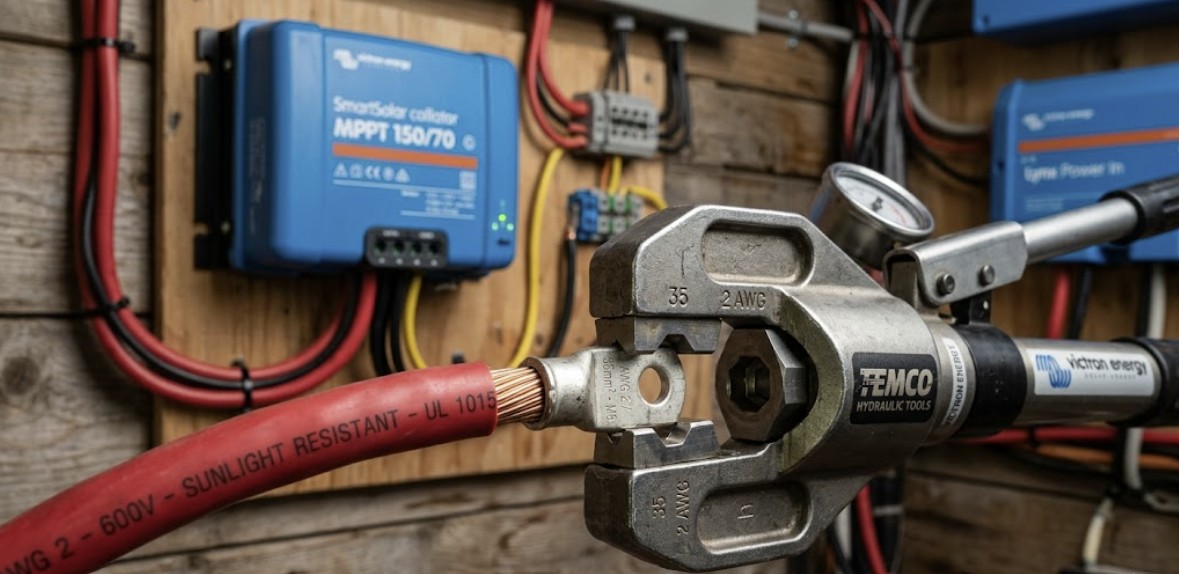
Introduction to Solar Panel Wire Sizing
Choosing the correct solar panel wire size is one of the most critical steps in designing a photovoltaic system. Whether you are working on a small off-grid setup or a large residential installation, improper wire sizing can result in energy losses, overheating, or even system failure.
Unlike standard AC household wiring, solar systems operate largely on DC power, where voltage drop and current handling become much more sensitive. In low-voltage systems such as 12V, 24V, and 48V, even a small voltage loss can significantly reduce system efficiency.
This guide combines practical field knowledge and technical standards to help you understand exactly how to determine the correct solar panel wire size for your system.
Table of Contents
Understanding Solar Panel Wire Size Basics
Before diving into calculations, it’s essential to understand the electrical fundamentals that influence solar panel wire size.
Amps vs Volts: What Really Matters
- Voltage (V): Electrical pressure pushing current through wires
- Current (Amps): The actual flow of electricity
The most important factor is current (amps).
However, voltage still plays a critical role because it affects:
- Power transmission efficiency
- Voltage drop over distance
- System design (12V vs 48V systems)
Why Current Dominates Wire Sizing
| The higher the current: | If you undersize the wire: |
| The more heat is generated in the wire The thicker the wire must be to handle the load safely | It overheats Insulation degrades Fire risk increases |
Key Factors That Affect Solar Panel Wire Size
1. System Current (Amperage)
To calculate current:The 1.25 factor is required by safety standards to account for continuous loads.
Example:
- 1200W system at 24V
- Current = 1200 / 24 × 1.25 = 62.5A
If you are running high-drain devices like a satellite dish, remember that [Starlink power consumption for off-grid cabins] requires a steady voltage, making proper wire sizing even more critical to avoid connection drops.
2. Voltage Drop
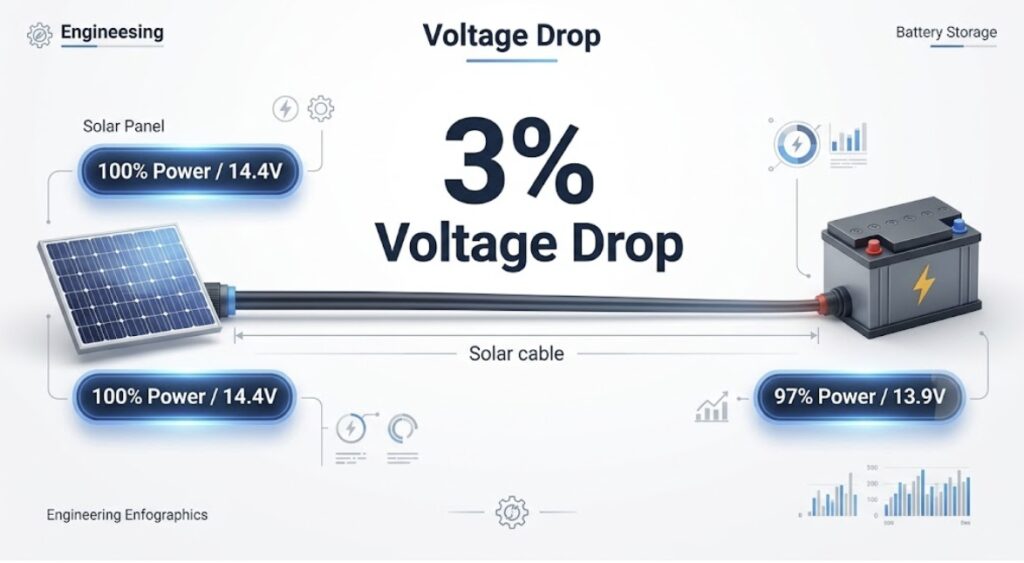
Voltage drop is one of the most overlooked factors in solar installations.
Recommended Limits:
- DC circuits: 2–3%
- Total system: Maximum 5%
| Why it matters: | Reduces charging efficiency Decreases power output Wastes solar energy |
In 24V systems, managing this drop is a balancing act between cost and performance. We explain this in detail in our guide on [why 24V off-grid solar systems are best for cabins].
3. Wire Length
The longer the wire:
- The greater the resistance
- The higher the voltage drop
Solution: Increase wire thickness as distance increases.
Trenching for a ground array often involves runs of 50ft or more. Compare the pros and cons of this distance in our [ground mount vs roof mount solar] analysis.
4. System Voltage (12V, 24V, 48V)
Higher voltage systems reduce current.
| System Voltage | Current | Wire Size Needed |
|---|---|---|
| 12V | High | Thick wires |
| 24V | Medium | Moderate wires |
| 48V | Low | Thinner wires |
This is why larger systems prefer 48V setups.
Increasing your voltage is the most effective way to keep your solar panel wire size manageable and affordable. See our [12V vs 24V vs 48V solar system] engineering comparison to decide which one is right for your build.
5. Temperature and Environment
- High temperatures reduce wire capacity
- Outdoor solar wires must resist:
- UV exposure
- Moisture
- Heat
6. Installation Method
- Conduit vs open air
- Number of wires grouped together
- Exposure to weather
All affect heat dissipation and wire performance.
Solar Panel Wire Size Charts (Quick Reference)
12V System Wire Size Chart
| Wire Size | Max Current | Max Distance |
|---|---|---|
| 10 AWG | 30A | 15 ft |
| 8 AWG | 40A | 25 ft |
| 6 AWG | 55A | 35 ft |
| 4 AWG | 70A | 55 ft |
| 2 AWG | 95A | 90 ft |
24V System Wire Size Chart
| Wire Size | Max Current | Max Distance |
|---|---|---|
| 10 AWG | 30A | 30 ft |
| 8 AWG | 40A | 50 ft |
| 6 AWG | 55A | 70 ft |
| 4 AWG | 70A | 110 ft |
| 2 AWG | 95A | 180 ft |
48V System Wire Size Chart
| Wire Size | Max Current | Max Distance |
|---|---|---|
| 10 AWG | 30A | 60 ft |
| 8 AWG | 40A | 100 ft |
| 6 AWG | 55A | 140 ft |
| 4 AWG | 70A | 220 ft |
| 2 AWG | 95A | 360 ft |
Wire Size Calculation Method
Voltage Drop Formula
Where:
- L = Length (one-way)
- I = Current
- R = Resistance
Aim to keep voltage drop under 3%.
To avoid manual calculation errors, we recommend using the [Blue Sea Systems Circuit Wizard], which is the gold standard for DC wire sizing.
Step-by-Step Example
System:
- 2400W solar array
- 48V system
- 80 ft distance
Step 1: Current = 2400 / 48 × 1.25 = 62.5A
Step 2: Voltage drop = 48 × 0.03 = 1.44V
Step 3: Select wire
Result: 1 AWG or 1/0 AWG copper
Types of Solar Wires and Cables
Wire vs Cable
- Wire: Single conductor
- Cable: Multiple wires bundled together
Best Wire Types for Solar Systems
For the run between your panels and your charge controller, do not use standard tray cable. I always specify [WindyNation 10 AWG PV Wire]. It’s double-insulated, UV-resistant, and rated for 600V-1000V. It’s a “favor” because buying it pre-terminated with MC4 connectors ensures a factory-grade weather seal, preventing the #1 cause of voltage drop: moisture-induced corrosion inside your connectors.
Check current price on Amazon –>
Never use standard indoor wire for outdoor solar systems.
Using the right cable is only half the battle; you also need a clear path. Follow our [24V solar system wiring diagram] to see exactly how to route your PV wires into your battery bank safely.
Copper vs Aluminum Wires
| Feature | Copper | Aluminum |
|---|---|---|
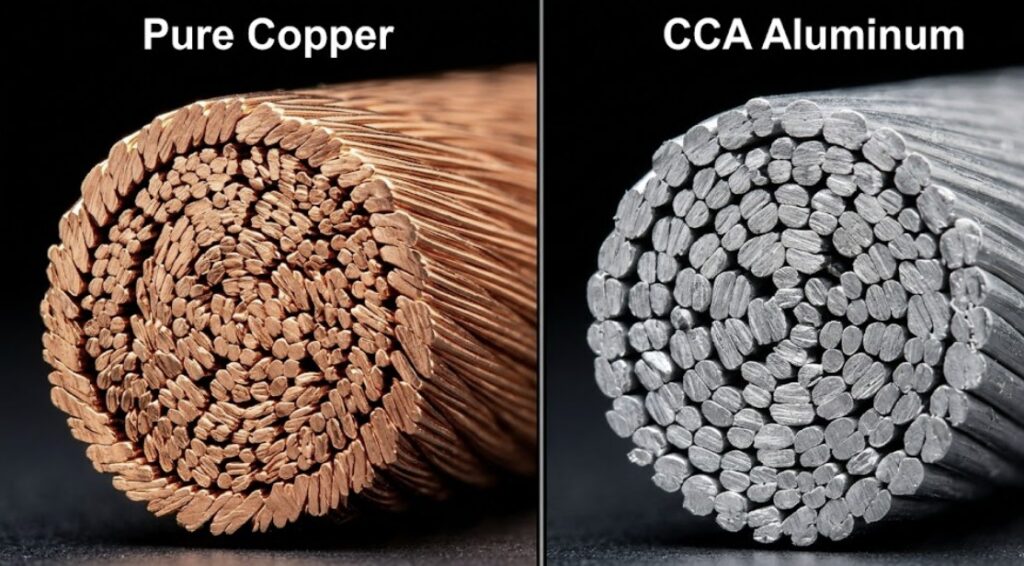
| Conductivity | High | Lower |
| Cost | Expensive | Cheaper |
| Durability | Excellent | Moderate |
Copper is strongly recommended for reliability.
Stranded vs Solid Wire
- Stranded: Flexible, best for solar
- Solid: Rigid, limited use
Common Mistakes
| 1. Ignoring Voltage Drop | Even small losses reduce system performance significantly. |
| 2. Using Undersized Wire | Leads to: Overheating Energy loss Fire hazards |
| 3. Using Incorrect Wire Type | Standard wires degrade quickly outdoors. |
| 4. Forgetting Temperature Effects | Hot rooftops reduce wire capacity. |
| 5. Not Planning for Expansion | Future upgrades may require larger wires. |
Practical Applications
Small Off-Grid System
- 1200W at 24V
- Recommended: 4 AWG
Residential Solar System
- 8000W at 48V
- Requires: Large gauge (4/0 AWG or parallel runs)
Battery Charging Circuits
When you’re wiring the battery-to-inverter path, any resistance is a fire hazard. I only trust [WindyNation 2/0 AWG Pure Copper Cables]. Many “budget” cables use CCA (Copper Clad Aluminum), which has significantly higher resistance and can overheat. This pure copper, welding-grade cable handles the massive amperage of a 3000W inverter without breaking a sweat, ensuring your 12V or 24V system stays efficient even under heavy load.
Check current price on Amazon –>
For ultra-minimalist setups, you can follow our [solar setup for micro cabin] guide, which focuses on short wire runs to minimize losses.
Advanced Considerations
NEC Requirements
- Wires must be rated for 125% of current
- Use UV-resistant cables
- Minimum 90°C rating
You can consult the latest [NFPA 70: National Electrical Code (NEC)] tables for officially sanctioned ampacity ratings and conduit fill limits.
Color Coding
- Red: Positive
- Black: Negative
- Green: Ground
Voltage Drop in Low Voltage Systems
| In 12V systems: | 1V drop = major power loss |
| In 120V systems: | Same drop is negligible |
This is why wire size matters more in solar systems.
Best Practices
- Keep wire runs short
- Use higher voltage systems (24V/48V)
- Always oversize slightly for safety
- Use certified solar-rated cables
- Follow local electrical codes
Safety Favor: A high-quality wire is useless if the connection is loose. I never allow a “pliers-only” crimp on my projects. You need an [IWISS Solar Crimping Tool Kit]. A professional ratcheting crimper ensures that the metal terminal is cold-welded to the copper wire, creating a zero-resistance path. It’s the only way to guarantee that your “calculated” voltage drop remains low over the next 20 years of vibration and thermal expansion.
Check current price on Amazon –>
Conclusion: Choosing the Right Solar Panel Wire Size
Selecting the correct solar panel wire size is not just about picking a number from a chart—it’s about understanding how current, voltage, distance, and environment interact.
To summarize:
- Amps determine wire thickness
- Voltage affects efficiency and losses
- Distance and temperature influence final size
A properly sized wire ensures:
- Maximum energy transfer
- Safe operation
- Long system lifespan
By applying the principles and calculations in this guide, you can design a solar system that performs efficiently and safely under real-world conditions.
Proper wire sizing is a core pillar of a professional installation. Integrate these calculations into your [complete off-grid power blueprint for retreat cabins] for a truly resilient system.
What is the most important factor when choosing the wire size?
The most important factor when determining the wire size is the current (amps) flowing through the system, because higher current generates more heat and requires thicker conductors to prevent overheating and safety hazards, while voltage plays a secondary role by influencing efficiency and voltage drop rather than directly dictating the minimum safe wire thickness.
How does voltage drop affect the wire size selection?
Voltage drop directly impacts the wire size because as electricity travels through a wire, resistance causes energy loss, and if the wire is too small, this loss increases significantly, reducing system efficiency, so increasing the solar panel wire size helps minimize voltage drop and maintain optimal performance, especially in low-voltage systems like 12V and 24V.
Why is solar panel wire size more critical in low-voltage systems?
Solar panel wire size is more critical in low-voltage systems because even a small voltage drop represents a large percentage of total system voltage, meaning that in a 12V system, losing 1V is a significant efficiency loss, whereas in higher voltage systems like 48V, the same loss is less impactful, making proper wire sizing essential for maintaining performance.
Can I use standard electrical wire instead of solar-rated wire?
Using standard electrical wire instead of properly rated solar cable is not recommended when determining solar panel wire size because typical household wires lack UV resistance, temperature tolerance, and weatherproof insulation required for solar installations, which can lead to insulation degradation, safety risks, and code violations over time.
What happens if the wire size is too small?
If the wire size is too small, the wire can overheat due to excessive current, causing insulation damage, reduced system efficiency, potential equipment failure, and in severe cases, fire hazards, which is why proper sizing is essential for both safety and performance.
Is it better to oversize solar panel wire size?
Yes, slightly oversizing solar panel wire size is generally recommended because it reduces voltage drop, improves efficiency, allows for future system expansion, and enhances safety, although excessively large wires can increase costs unnecessarily without significant additional benefits.
How do I calculate the wire size for my system?
To calculate the wire size, you first determine the system current by dividing total wattage by system voltage and applying a safety factor, then calculate acceptable voltage drop, and finally use wire sizing charts or formulas to select a wire gauge that can safely carry the current while minimizing energy loss.
Does system voltage change solar panel wire size requirements?
Yes, because higher voltage systems carry less current for the same power output, allowing the use of smaller wires, while lower voltage systems require thicker wires due to higher current flow.
What type of wire is best for solar panel wire size selection?
The best wire type is PV wire, which is specifically designed for solar applications with UV resistance, high temperature tolerance, and durability, making it ideal for outdoor installations compared to standard wiring options.
How does temperature impact the wire size?
Temperature affects the wire size because higher ambient temperatures increase electrical resistance and reduce the wire’s current-carrying capacity, requiring larger wire sizes to maintain safety and performance under hot conditions such as rooftop installations.
Can aluminum wire be used for solar panel wire size?
Aluminum wire can be used, but it requires a larger gauge than copper due to lower conductivity, and it may need additional maintenance and proper connectors to prevent corrosion, which is why copper is typically preferred despite its higher cost.
Why is copper preferred for solar panel wire size?
Copper is preferred for solar panel wire size because it has higher conductivity, better flexibility, greater durability, and lower resistance compared to aluminum, allowing smaller wire sizes and improved long-term reliability in solar installations.
What is the recommended voltage drop for solar panel wire size?
The recommended voltage drop when determining solar panel wire size is typically between 2% and 3% for DC circuits, as this range balances efficiency and cost while ensuring minimal energy loss in the system.
How does wire insulation affect solar panel wire size decisions?
Wire insulation affects solar panel wire size decisions because different insulation types have varying temperature ratings and environmental resistance, and choosing the correct insulation ensures that the wire can safely operate under expected conditions without degradation.
Do I need different solar panel wire size for AC and DC circuits?
Yes, solar panel wire size requirements differ between AC and DC circuits because DC wiring from panels requires specialized solar-rated cables with UV resistance, while AC wiring from the inverter can use standard electrical wiring rated for indoor or outdoor use.
What is AWG and how does it relate to solar panel wire size?
AWG, or American Wire Gauge, is a standardized system used to measure wire thickness, and in solar panel wire size selection, a lower AWG number indicates a thicker wire capable of carrying more current with less resistance.
How does conduit installation affect solar panel wire size?
Conduit installation affects solar panel wire size because multiple wires enclosed in a conduit generate more heat, which reduces their current-carrying capacity, often requiring larger wire sizes to compensate for this thermal effect.
What are the risks of incorrect solar panel wire size?
Incorrect solar panel wire size can lead to overheating, increased energy losses, reduced system lifespan, failed inspections, and serious safety hazards such as electrical fires, making proper sizing essential for reliable operation.
How often should solar panel wire size be checked or upgraded?
Solar panel wire size should be reviewed whenever the system is expanded or modified, as increased power output may require larger wires, and periodic inspection ensures that the wiring remains safe and compliant with current standards.
Does solar panel wire size affect inverter performance?
Yes, it affects inverter performance because insufficient wire size can cause voltage drop and power loss before electricity reaches the inverter, reducing its efficiency and overall system output.
Is there a universal solar panel wire size for all systems?
There is no universal size because each system has unique requirements based on power output, voltage, distance, and environmental conditions, which must all be considered for accurate sizing.
How does system expansion impact solar panel wire size?
System expansion impacts because adding more panels increases current flow, which may exceed the capacity of existing wires, requiring upgrades to maintain safety and efficiency.
Why do solar installations require special wire ratings?
Solar installations require special wire ratings because they are exposed to harsh outdoor conditions such as UV radiation, heat, and moisture, and proper solar panel wire size must include cables designed to withstand these factors.
What role do safety standards play in solar panel wire size?
Safety standards play a crucial role in solar panel wire size by defining minimum requirements for current capacity, insulation, and environmental resistance, ensuring that installations are safe, efficient, and compliant with regulations.
Can I reduce costs by choosing a smaller wire size?
Reducing costs by choosing a smaller wire size is not advisable because the initial savings can lead to higher long-term losses, reduced efficiency, and increased safety risks, making proper sizing a better investment.
How do I choose solar panel wire size for long-distance installations?
For long-distance installations, solar panel wire size should be increased to compensate for higher resistance and voltage drop, ensuring efficient energy transfer even over extended cable runs.
Does shading or panel performance affect solar panel wire size?
Shading or panel performance does not directly change the requirements, but system design adjustments may alter current levels, which in turn can influence wire sizing considerations.
What is the best practice for selecting the wire size?
The best practice is to calculate current accurately, limit voltage drop, choose high-quality solar-rated cables, consider environmental factors, and follow applicable electrical codes to ensure safe and efficient system operation.
8 thoughts on “Solar Panel Wire Size & Voltage Drop: The Ultimate 12V, 24V, and 48V Guide”