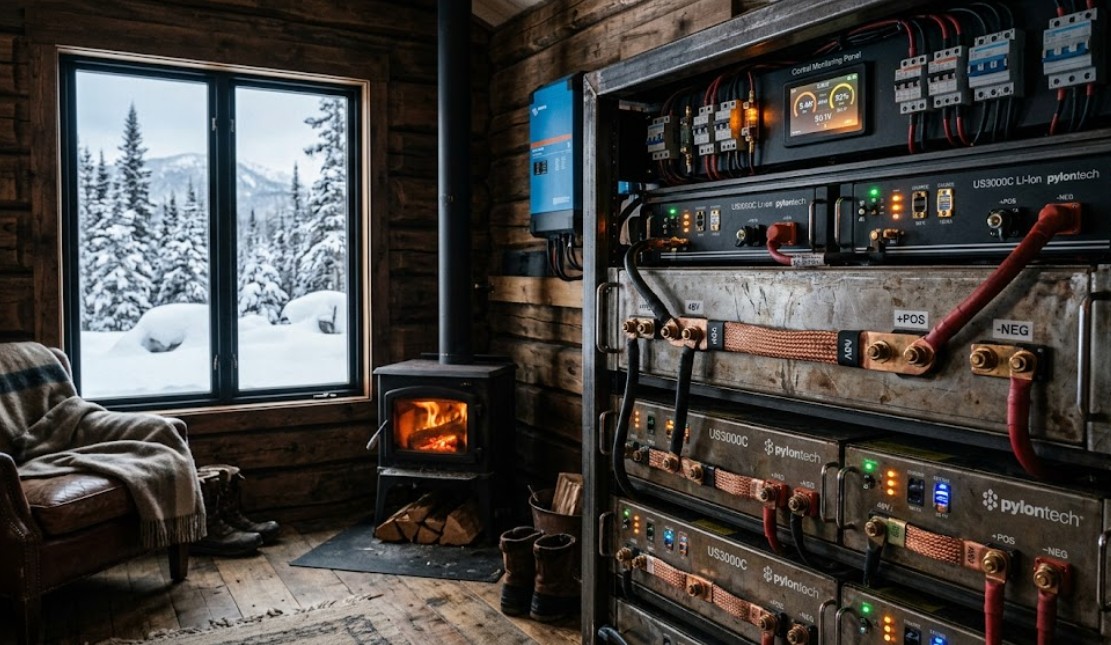
Choosing the best solar battery for cabin installations requires engineering-level analysis — not product marketing. Remote cabins operate under harsher conditions: cold temperatures, irregular charging cycles, long idle periods, and limited maintenance access.
To understand if you should choose a single large unit or a parallel bank, check out our [2x 100Ah vs 1x 200Ah battery comparison].
This guide focuses on the real decision-making metrics:
- Round-trip efficiency
- Battery Management System (BMS) safety
- Low-temperature charging performance
- Self-discharge rates
- Deep-cycle durability
- Capacity sizing (Ah vs kWh)
- 24V vs 48V system efficiency
While LiFePO4 is our top pick for 2026, you can explore the next generation of technology in our [LiFePO4 vs solid state batteries for solar] comparison.
We analyze these factors using engineering-level data to identify the best solar battery for cabin systems in 2026.
Table of Contents
Choosing Your Path: Component-Based Systems vs. All-In-One Solar Generators
When searching for the best solar battery for cabin use, you must first decide between a DIY component-based system or a portable “all-in-one” solar generator.
- Component-Based (EG4, SOK, Victron): These offer the best long-term value. You choose your own inverter and charge controller. This is the best solar battery for cabin setups intended for full-time living or heavy loads.
- All-in-One Systems: If you want 48V power and massive storage without learning how to crimp 2/0 AWG cables, the [EcoFlow DELTA Pro Ultra] is a masterpiece of modern engineering. It’s essentially a portable 48V ecosystem that can output 7,200W (split-phase 120V/240V), meaning it can run your well pump and your mini-split simultaneously. It’s the fastest, most secure shortcut to a professional off-grid lifestyle. Check current price on Amazon –>
Key Comparison: If you need to power a well pump or a mini-split, a 48V component system is the best solar battery for cabin reliability. If you only need to charge laptops and run LED lights during weekends, an all-in-one unit like the EcoFlow Delta Pro saves days of installation time.
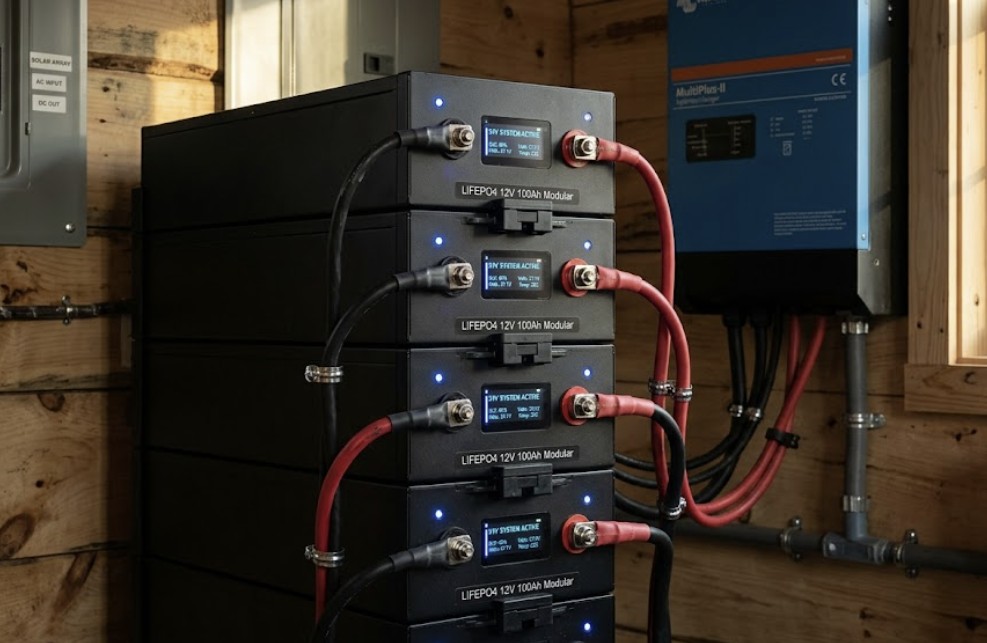
Best Solar Battery for Cabin: Engineering Decision Factors That Actually Matter
Most online guides list products. That approach fails for off-grid cabins where reliability matters more than brand.
The best solar battery for cabin installations must meet these core criteria:
Critical Cabin Battery Requirements
| Requirement | Why It Matters for Cabins | Recommended Spec |
|---|---|---|
| Low-temperature charging | Cabins experience freezing winters | Charge below 0°C capability |
| Round-trip efficiency | Limited solar input in winter | 92%+ preferred |
| Deep cycle durability | Daily cycling in off-grid setups | 4000+ cycles |
| Self-discharge rate | Long idle periods | <3% per month |
| BMS protection | Remote unattended operation | Multi-layer safety |
| Expandability | Growing energy needs | Modular capability |
Cabins differ from homes. Your system must survive:
- Snow coverage reducing solar generation
- Long winter nights
- Low maintenance access
- Voltage drop across long cable runs
These factors eliminate many residential batteries from consideration.
Best Solar Battery for Cabin Brands in 2026
1. EG4 Electronics (The Engineering Gold Standard)
To build the 48V “Gold Standard” architecture I’ve detailed, the [LiTime 48V 100Ah Server Rack Battery] is your best bet. One single unit provides 5.12kWh of energy—equivalent to four 100Ah 12V batteries but with 75% less current (amps) flowing through your wires. This means your system runs cooler, safer, and with much thinner, cheaper copper cables. It is the professional way to scale a cabin system in 2026.
Check current price on Amazon –>
2. Battle Born Batteries (The Cold Weather King)
If your cabin sits unattended in freezing temperatures, you cannot risk a standard battery bank. I always specify the [Battle Born 100Ah Heated Battery]. It features a proprietary internal heating system that allows it to charge safely down to -4°F. While others are bricked by the cold, this unit uses its own energy to stay in the “safe zone.” It is the “buy once, cry once” solution for high-altitude reliability.
Check current price on Amazon –>
3. EcoFlow Delta Pro / Ultra (The Weekend Warrior’s Choice)
For those who don’t want to deal with busbars and crimping cables, the EcoFlow Ultra is the best solar battery for cabin simplicity. It can expand up to 90kWh, though the cost per Wh is higher than raw server-rack batteries.
4. SOK Battery (The Best Value for Money)
SOK offers user-serviceable LiFePO4 units. In a remote cabin, being able to replace a single internal cell or the BMS without shipping the whole unit back is why many consider SOK the best solar battery for cabin independence.
Deep Cycle Battery Chemistry: LiFePO4 vs AGM vs Lead-Acid for Cabins
Battery chemistry determines lifespan, efficiency, and safety.
LiFePO4 vs AGM vs Lead-Acid: 10-Year Cost Analysis
| Battery Type | Initial Cost (10kWh) | Cycles | Efficiency | Replacement (10 yrs) | Total 10-Year Cost |
|---|---|---|---|---|---|
| LiFePO4 | $4,500 | 6000 | 96% | 0 | $4,500 |
| AGM | $2,800 | 800 | 85% | 3 replacements | $8,400 |
| Flooded Lead Acid | $2,200 | 600 | 80% | 4 replacements | $8,800 |
| Gel Battery | $3,000 | 1000 | 85% | 2 replacements | $6,000 |
Batteries represent about 40% of the total [solar panels for tiny home cost], making the initial chemistry choice vital for ROI.
Key Technical Findings
LiFePO4 dominates because:
- 10x longer cycle life
- Higher efficiency
- No maintenance
- Low self-discharge
LiFePO4 batteries dominate cabin systems due to longer lifespan and improved safety. Research published by the National Renewable Energy Laboratory on LiFePO4 battery advantages confirms higher thermal stability and improved cycle life compared to traditional lead-acid batteries.
For remote cabins, replacing batteries every 2-3 years is impractical.
LiFePO4 is the best solar battery for cabin setups based on lifecycle cost.
Round-Trip Efficiency: The Hidden Performance Metric
Round-trip efficiency determines how much solar energy you actually use.
Round-trip efficiency determines how much solar energy you actually use. According to the U.S. Department of Energy’s explanation of round-trip efficiency definition, higher-efficiency batteries store more usable energy and reduce generator runtime in off-grid cabin environments.
Example
Solar produces 10 kWh:
| Battery Type | Efficiency | Usable Energy |
|---|---|---|
| LiFePO4 | 96% | 9.6 kWh |
| AGM | 85% | 8.5 kWh |
| Lead-Acid | 80% | 8 kWh |
Over winter, that difference becomes critical.
Higher efficiency means:
- Smaller solar array needed
- Faster charging
- Less generator runtime
The best solar battery for cabin systems prioritize efficiency.
Battery Management System (BMS): The Safety Layer Most Guides Ignore
The BMS controls:
- Over-charge protection
- Over-discharge protection
- Temperature protection
- Cell balancing
- Short circuit protection
Advanced BMS Features to Look For
| Feature | Why It Matters |
|---|---|
| Low temp charging cut-off | Prevents lithium damage |
| Cell balancing | Extends lifespan |
| Bluetooth monitoring | Remote diagnostics |
| High current protection | Prevents inverter damage |
| Auto recovery | Remote cabin reliability |
Premium cabin batteries include:
- Heated lithium cells
- Smart BMS
- Auto disconnect
These features define the best solar battery for cabin reliability.
Safety First: Why BMS and Enclosures Matter
The best solar battery for cabin safety isn’t just about chemistry; it’s about the Battery Management System (BMS). In a remote location, a BMS failure could lead to a “dead” system with no way to jumpstart it.
- UL1973 Certification: Ensure your battery meets this standard for stationary energy storage.
- Non-Toxic Chemistry: Unlike lead-acid, LiFePO4 doesn’t off-gas. This allows you to install the best solar battery for cabin systems directly under a bed or in a kitchen closet without needing external ventilation. This is a game-changer for [400 sq ft cabin power needs] where space is at a premium.
If you are worried about theft or wildlife in remote areas, check how to integrate these batteries into our [stealth setup techniques to conceal panels] within our main cabin blueprint.
Temperature Performance: Freezing Cabin Conditions
Cold weather is one of the biggest challenges for off-grid cabins. Studies on battery performance in cold temperatures show that lithium batteries lose capacity as temperatures drop, making heated LiFePO4 systems the most reliable solution.
Temperature Tolerance Comparison
| Battery Type | Charge Temp | Discharge Temp | Performance at −10°C |
|---|---|---|---|
| LiFePO4 Heated | −20°C | −30°C | Excellent |
| Standard LiFePO4 | 0°C | −20°C | Good |
| AGM | −20°C | −30°C | Moderate |
| Flooded Lead Acid | −10°C | −20°C | Poor |
| Gel | −10°C | −20°C | Moderate |
Cold reduces battery capacity:
- −10°C reduces lithium capacity by 20%
- −20°C reduces lead acid capacity by 40%
The best solar battery for cabin installations often use heated LiFePO4 batteries.
Lithium is king, but you must know the rules for cold weather. Follow our dedicated guide on [winter solar charging lithium batteries] to prevent permanent cell damage.
Ah vs kWh: How to Size Your Cabin Battery Correctly
Battery capacity confusion leads to undersized systems.
Conversion Formula
kWh = (Ah × Voltage) ÷ 1000
Example:
200Ah battery at 48V:
200 × 48 ÷ 1000 = 9.6 kWh
Cabin energy needs:
| Cabin Type | Daily Usage | Battery Size |
|---|---|---|
| Small weekend cabin | 2-4 kWh | 5-10 kWh |
| Medium cabin | 5-8 kWh | 10-15 kWh |
| Full-time cabin | 8-15 kWh | 15-30 kWh |
Correct sizing is essential for off-grid reliability. This guide on how to calculate battery capacity provides additional engineering insights for determining proper storage for remote cabins.
Oversizing reduces generator usage.
Tailoring Your Choice: Best Solar Battery for Cabin Lifestyles
The Minimalist “Writer’s Retreat” (1-3 kWh)
For a tiny space, the best solar battery for cabin use is a simple 12V 100Ah or 200Ah Lithium unit. This easily supports lights and a laptop. (See our [micro cabin solar power guide]).
The Standard Off-Grid Family Cabin (10-15 kWh)
To run a standard refrigerator and a water pump, you need 24V or 48V. A 24V SOK or EG4 bank is often the best solar battery for cabin balance between performance and budget.
The High-Comfort Modern Cabin (20kWh+)
If you have a mini-split AC or an electric cooktop, the best solar battery for cabin reliability is a 48V rack-mounted system. This reduces amperage and heat, preventing system trips during peak summer heat. (Check our [400 sq ft cabin power needs] for more sizing tips).
Self-Discharge Rate: Critical for Seasonal Cabins
Cabins often sit unused for months.
| Battery Type | Monthly Self-Discharge |
|---|---|
| LiFePO4 | 2-3% |
| AGM | 5% |
| Flooded Lead Acid | 10-15% |
Lead acid batteries may drain completely over winter.
LiFePO4 maintains charge longer — ideal for remote cabins.
Top 5 Best Solar Battery for Cabin Brands (2026)
Top 5 Battery Brands 2026
| Brand | Chemistry | Capacity | Warranty | Peak Discharge | Cycles |
|---|---|---|---|---|---|
| Battle Born | LiFePO4 | 100Ah-270Ah | 10 yrs | 200A | 5000 |
| EG4 | LiFePO4 | 5-14 kWh | 10 yrs | 200A | 7000 |
| SOK | LiFePO4 | 100-206Ah | 7 yrs | 150A | 4000 |
| Victron + Pylontech | LiFePO4 | Modular | 10 yrs | High | 6000 |
| Renogy Smart Lithium | LiFePO4 | 100-200Ah | 5 yrs | 100A | 4000 |
Engineering preference:
- EG4 — Best performance
- Battle Born — Best reliability
- Victron system — Best expandable
These represent the best solar battery for cabin configurations.
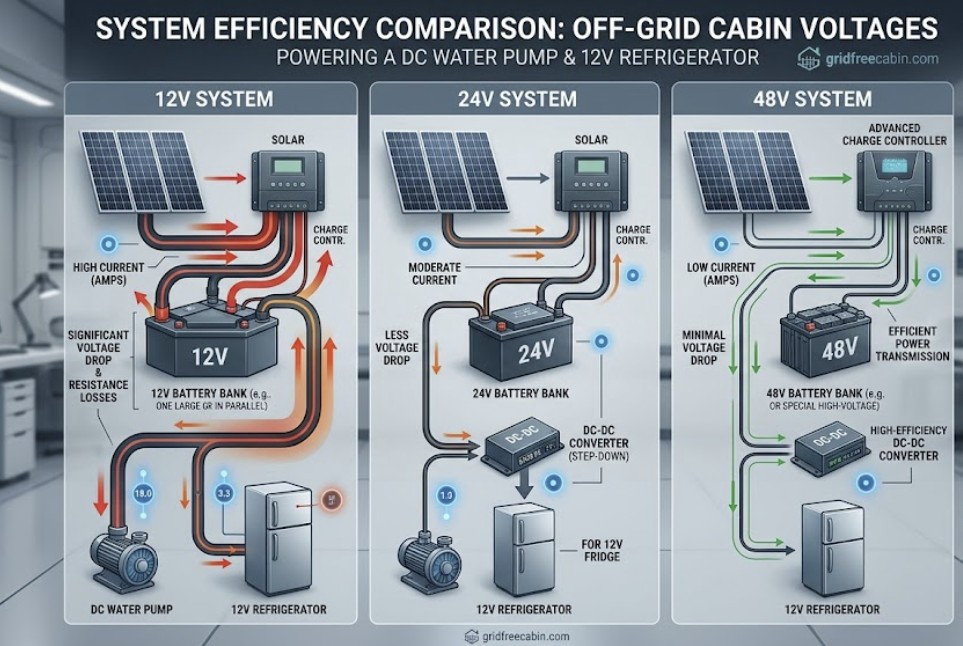
Series vs Parallel: 12V vs 24V vs 48V Cabin Systems
Higher voltage improves efficiency.
Series vs Parallel Configuration Table
| Voltage | Current | Efficiency | Best For |
|---|---|---|---|
| 12V | High | Low | Small cabins |
| 24V | Medium | Good | Medium cabins |
| 48V | Low | Highest | Full-time cabins |
Example: 3kW load:
| Voltage | Current |
|---|---|
| 12V | 250A |
| 24V | 125A |
| 48V | 62.5A |
Lower current = less heat + smaller cables.
Higher-voltage systems reduce current and improve efficiency. Many engineers recommend 48V systems because of improved performance.
48V systems are preferred for the best solar battery for cabin installations.
Choosing 24V or 48V is the single best way to maximize your battery’s life. Learn more about.
Wiring your batteries affects your entire system’s efficiency. Review the technical differences in our [12V vs 24V vs 48V solar system] breakdown.
Optimal Solar Battery Architecture for Remote Cabins
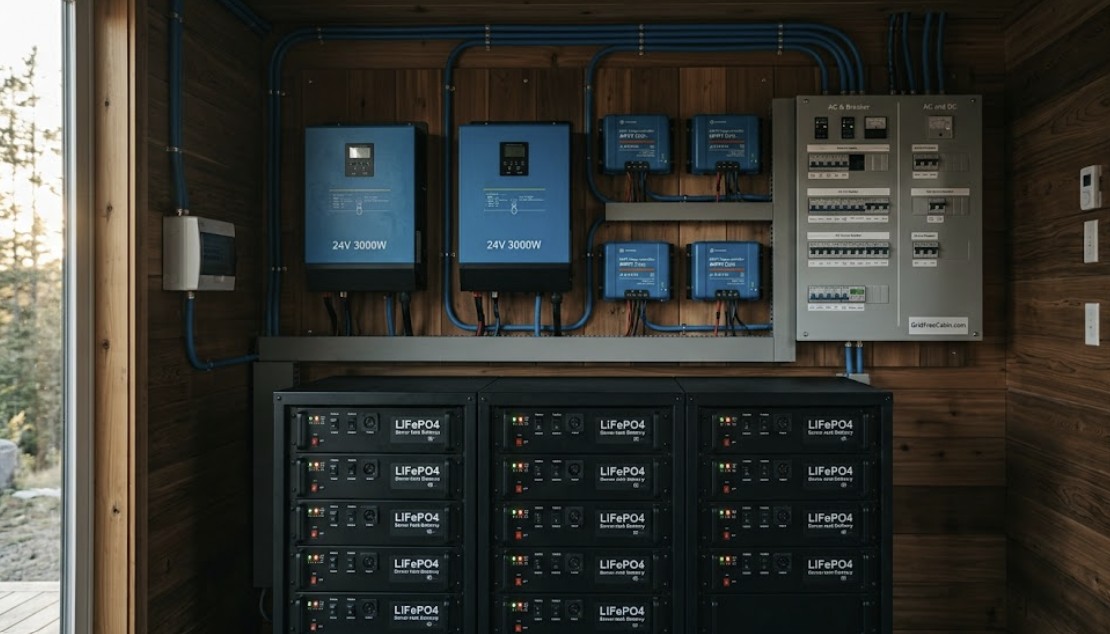
Recommended system:
- 48V LiFePO4 battery bank
- MPPT charge controller
- Pure sine wave inverter
- Smart BMS battery
Ideal System Flow
This architecture maximizes efficiency.
Depth of Discharge: Why 100% Matters for Cabins
| Battery Type | Depth of Discharge |
|---|---|
| LiFePO4 | 90-100% |
| AGM | 50% |
| Flooded Lead Acid | 50% |
Example: 10kWh battery:
- LiFePO4 usable: 9kWh
- AGM usable: 5kWh
LiFePO4 delivers almost double usable energy.
Charging Speed and Solar Utilization
Cabins have limited sunlight.
Charging rate comparison:
| Battery | Max Charge Rate |
|---|---|
| LiFePO4 | 1C |
| AGM | 0.3C |
| Lead Acid | 0.2C |
Faster charging captures limited solar window.
To utilize the high charge rates of LiFePO4 batteries, you need a strong input from the [best solar panels for tiny house] currently available.
Best Solar Battery for Cabin: 2026 Engineering Recommendations
Based on all performance factors:
| Best Overall | EG4 LiFePO4 48V battery |
| Best Budget | SOK LiFePO4 |
| Best Premium | Victron + Pylontech |
| Best Cold Weather | Heated Battle Born LiFePO4 |
Installation Best Practices for Cabin Batteries
- Install indoors if possible
- Use insulated battery enclosure
- Add temperature monitoring
- Use DC disconnect switch
Safety improves longevity.
Proper ventilation and placement are part of a larger strategy. Follow our [complete off-grid power blueprint for retreat cabins] to ensure your entire system is balanced and durable.
Final Engineering Verdict: Best Solar Battery for Cabin Systems
The best solar battery for cabin setups share these characteristics:
- LiFePO4 chemistry
- 48V architecture
- Smart BMS
- Heated cold-weather capability
- 4000+ cycle lifespan
Recommended minimum system:
- 10-15 kWh LiFePO4 battery
- 48V inverter
- MPPT controller
This configuration delivers:
- Maximum efficiency
- Long lifespan
- Cold-weather reliability
Proper system design improves reliability and longevity. Following off-grid solar battery design best practices ensures maximum performance in remote cabin environments.
The best solar battery for cabin is not defined by brand — it is defined by engineering performance, lifecycle cost, and reliability in harsh environments.
What is the best solar battery for cabin use in cold climates?
The best solar battery for cabin installations in cold climates is a heated LiFePO4 (Lithium Iron Phosphate) battery. These batteries include built-in temperature management systems that allow safe charging below freezing temperatures. Unlike AGM or lead-acid batteries, heated LiFePO4 batteries maintain higher efficiency, longer lifespan, and stable voltage output even in winter conditions. For remote cabins exposed to snow and freezing temperatures, heated LiFePO4 batteries offer the most reliable performance.
How much battery capacity do I need for an off-grid cabin?
Battery capacity depends on how much energy your cabin consumes daily. Small weekend cabins typically require between 5 and 10 kWh of storage, while medium-sized cabins usually need around 10 to 15 kWh. Full-time off-grid cabins often require 15 to 30 kWh or more, especially if running appliances such as refrigerators, water pumps, or heating systems. Choosing a slightly larger battery improves reliability, reduces generator usage, and ensures power during cloudy or snowy periods.
Why is LiFePO4 considered the best solar battery for cabin systems?
LiFePO4 batteries are considered the best solar battery for cabin systems because they offer longer lifespan, higher efficiency, and minimal maintenance. These batteries typically last between 4,000 and 7,000 cycles, which translates to 10 to 15 years of use. They also support deeper discharge, meaning you can use more of the stored energy without damaging the battery. Additionally, LiFePO4 batteries have a lower self-discharge rate, making them ideal for cabins that remain unused for long periods.
Should I choose a 12V, 24V, or 48V battery system for a cabin?
Most modern off-grid cabins benefit from a 48V battery system. Higher voltage systems reduce energy loss, improve inverter efficiency, and allow smaller cable sizes. A 12V system is typically suitable only for very small cabins or temporary setups. A 24V system works well for medium-size cabins, but a 48V configuration delivers the best performance for full-time off-grid living. For this reason, most installers recommend 48V as the best solar battery for cabin installations.
How long does a solar battery last in a remote cabin?
The lifespan of a solar battery depends on its chemistry and usage patterns. LiFePO4 batteries typically last 10 to 15 years, while AGM batteries usually last between 3 and 5 years. Flooded lead-acid batteries often require replacement even sooner, especially in cold environments. Because remote cabins are harder to maintain, long-lasting batteries reduce maintenance trips and replacement costs. This is why LiFePO4 technology is widely considered the best solar battery for cabin setups.
Will solar batteries still work during winter and cloudy weather?
Yes, solar batteries are designed to store excess energy and supply power during low-sunlight conditions. However, winter performance depends heavily on battery size and efficiency. The best solar battery for cabin systems uses high-efficiency LiFePO4 batteries combined with larger storage capacity. Many off-grid cabin owners also integrate backup generators to recharge batteries during extended cloudy periods. With proper sizing and system design, solar batteries can provide reliable power throughout winter months.
Can I mix different brands of batteries in my cabin?
No. To maintain the title of the best solar battery for cabin reliability, you should never mix brands or ages of batteries. Different internal resistances will cause one battery to work harder than the other, leading to premature failure.
How do I protect my cabin batteries during the off-season?
If you leave your cabin for the winter, the best solar battery for cabin storage practice is to charge them to 50-70% and disconnect the main fuse. LiFePO4 batteries have a very low self-discharge rate and will be ready for you in the spring.
Is a Tesla Powerwall the best solar battery for cabin use?
While popular, the Powerwall is often not the best solar battery for cabin setups because it requires an internet connection for full functionality and is harder to service in remote areas. Component-based LiFePO4 systems are usually more resilient.
14 thoughts on “Best Solar Battery for Cabin: Technical Guide for Off-Grid Reliability, Cold Weather Performance, and Long-Term Value (2026)”