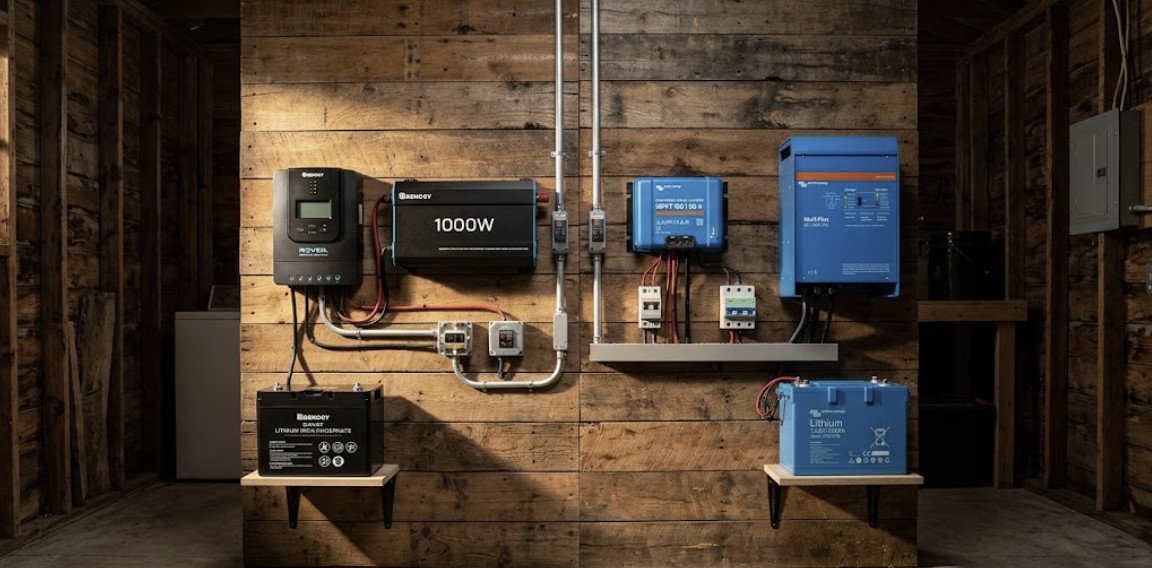
Renogy vs Victron: In 2026, choosing between these two giants is no longer a simple budget vs premium decision. Both brands have evolved rapidly, offering lithium-ready systems, smart monitoring, and modular off-grid scalability. The real question is which ecosystem delivers the best long-term performance for cabins, RVs, and full-time off-grid homes.
We conducted a full technical comparison across solar charge controllers, inverters, batteries, monitoring systems, warranties, pricing, and real-world performance to determine which brand truly delivers the best value.
This guide breaks down Renogy vs Victron across every critical component so you can confidently build the right off-grid system in 2026.
Table of Contents
Renogy vs Victron: Quick 2026 Comparison
| Feature | Renogy | Victron |
|---|---|---|
| Price | Budget-Friendly | Premium |
| Build Quality | Good | Professional-Grade |
| Monitoring | Basic Bluetooth | Advanced Remote Monitoring |
| Expandability | Limited | Highly Scalable |
| Efficiency | 95-97% | 97-99% |
| Warranty | 1-5 Years | 5 Years Standard |
| Ecosystem | Partial Integration | Full System Integration |
| Best For | Beginners, Budget Builds | Full-Time Off-Grid Systems |
Bottom Line renogy vs victron:
- Renogy = Best value for small to medium setups
- Victron = Best performance for long-term off-grid systems
Brand Overview: Renogy vs Victron Philosophy
Renogy: Accessible Solar for DIY Off-Grid Users
Renogy built its reputation on affordable solar kits and beginner-friendly components. Their ecosystem focuses on:
- Plug-and-play solar kits
- Affordable lithium batteries
- Basic monitoring solutions
- Entry-level MPPT controllers
- RV and van life solutions
Renogy’s plug-and-play kits are often the starting point for small projects. If you are building a tiny space, see how these components fit into a [solar setup for micro cabin].
Renogy systems are popular for:
- Off-grid cabins (weekend use)
- Camper vans
- RV solar systems
- Small backup systems
- DIY solar beginners
Renogy’s major advantage is cost efficiency. You can build a complete off-grid system at 30–40% less cost compared to Victron.
Victron: Professional Off-Grid Power Systems
Victron Energy targets high-performance solar systems designed for:
- Full-time off-grid homes
- Marine installations
- Remote cabins
- Industrial off-grid setups
- Overlanding expedition vehicles
Victron’s key strengths include:
- Advanced MPPT tracking
- Smart system integration
- Remote monitoring (VRM Portal)
- Modular scalability
- Professional-grade durability
For those building a permanent residence, Victron’s reliability is a cornerstone of a [complete off-grid power blueprint for retreat cabins].
Victron equipment is designed for 10+ year continuous operation in demanding environments.
Charge Controller Comparison: Renogy vs Victron Performance
The solar charge controller is the brain of your off-grid system.
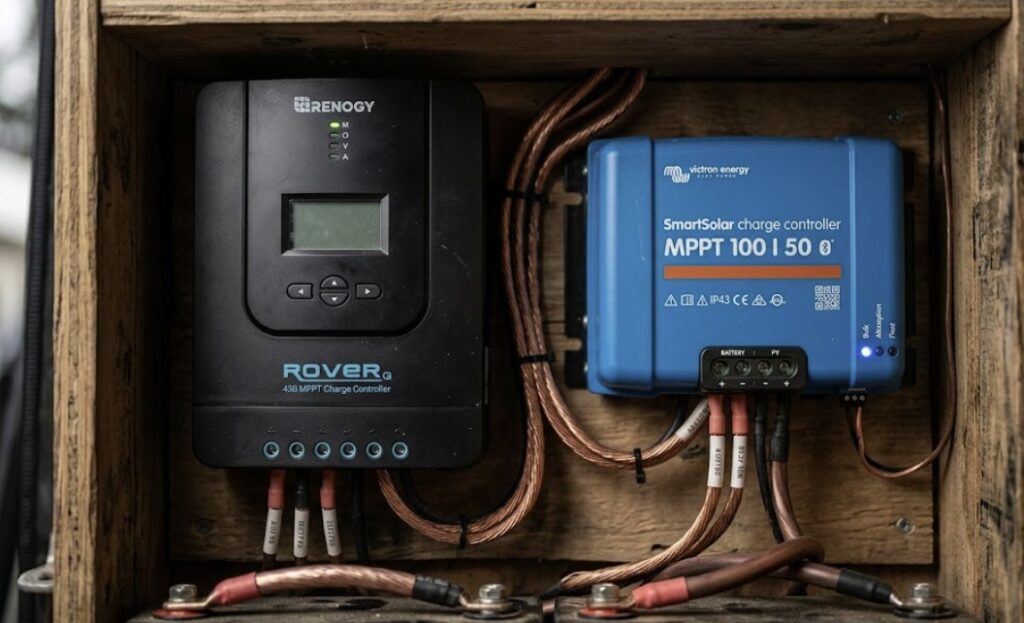
If you can afford to spend a little more on just one component, let it be the charge controller. I always point my clients toward the [Victron SmartSolar MPPT 100/50]. Its “Ultra-Fast” tracking algorithm isn’t just marketing—it actually captures up to 10% more energy on cloudy days compared to budget controllers. In an off-grid cabin where every watt-hour counts during winter, that 10% is the difference between having lights at night or sitting in the dark.
Check current price on Amazon –>
MPPT Controller Comparison
| Feature | Renogy Rover MPPT | Victron SmartSolar MPPT |
|---|---|---|
| Efficiency | 96-97% | 98-99% |
| Cooling | Fan-cooled | Passive cooling |
| Bluetooth | Optional | Built-in |
| Monitoring | Basic App | VRM Remote Access |
| Voltage Support | 12/24V | 12/24/36/48V |
| Tracking Speed | Moderate | Ultra-Fast |
| Warranty | 2-5 Years | 5 Years |
According to technical studies on [MPPT algorithm efficiency], ultra-fast tracking can improve harvest by up to 10% in rapidly changing weather.
While Renogy excels at 12V, Victron’s ability to handle higher voltages is a massive advantage. Read why we recommend a [24V off-grid solar system for cabins] to reduce energy loss.
Real-World Performance Differences
Victron performs better in:
- Cloudy conditions
- Partial shading
- Cold temperatures
- Early morning sunlight
- Late afternoon sun
This can result in 10-20% more daily energy harvest depending on climate.
Renogy performs well in:
- Full sun environments
- Smaller solar arrays
- Budget builds
- Simple systems
For cabins in variable weather, Victron often delivers noticeably higher output.
Inverter Comparison: Renogy vs Victron Off-Grid Power
Inverter Lineup Comparison
| Feature | Renogy Pure Sine | Victron MultiPlus |
|---|---|---|
| Build Quality | Consumer Grade | Industrial Grade |
| Surge Capacity | Moderate | Very High |
| Parallel Capability | Limited | Yes |
| Grid Assist | No | Yes |
| Smart Integration | Limited | Full Ecosystem |
| Reliability | Good | Exceptional |
The differences in idle draw and surge handling are so vast that we’ve created a standalone [Renogy vs Victron inverter comparison] for those needing mission-critical power.
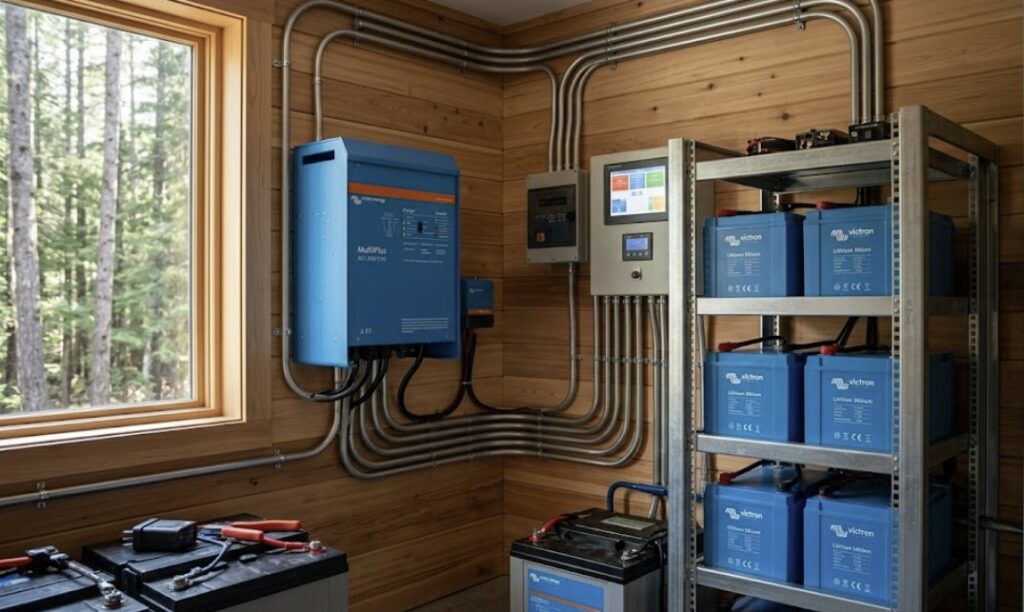
Victron dominates the 48V market, while Renogy is great for 12V. See which voltage fits your needs in our [12V vs 24V vs 48V solar system] analysis.
Real-World Example
A 48V Victron MultiPlus 5000VA:
- Runs full off-grid homes
- Supports air conditioners
- Handles surge loads easily
- Works continuously for years
A Renogy 3000W inverter:
- Works well for weekend cabins
- Suitable for small appliances
- Best for light usage
Victron clearly dominates for full-time off-grid setups.
Battery Comparison: Renogy vs Victron Lithium Systems
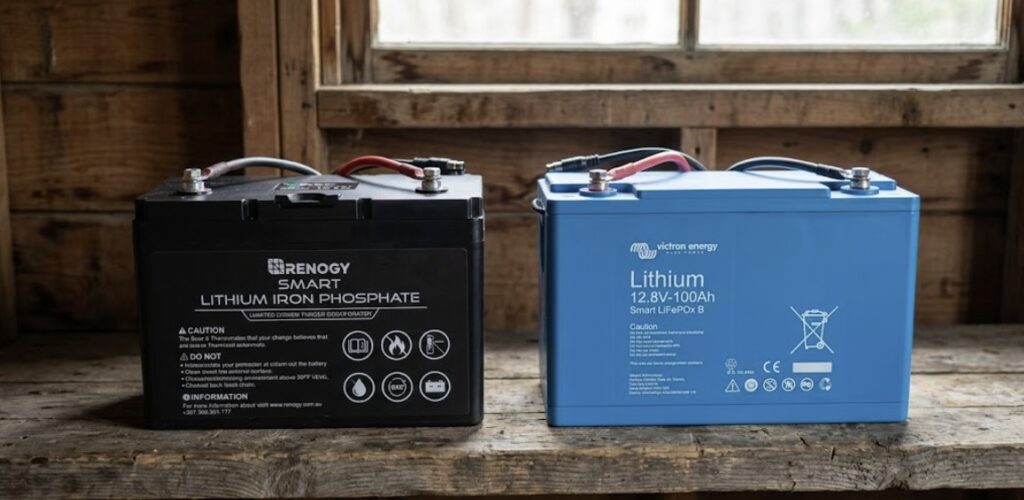
Lithium Battery Comparison
| Feature | Renogy LiFePO4 | Victron Smart Lithium |
|---|---|---|
| Cycle Life | 4000-5000 | 5000-7000 |
| Bluetooth | Some Models | Built-in |
| Temperature Protection | Yes | Advanced |
| Integration | Limited | Full Ecosystem |
| Price | Lower | Higher |
Battery Performance Differences
Victron batteries offer:
- Better cold weather performance
- Advanced battery management
- System integration
- Longer lifespan
Renogy batteries offer:
- Lower upfront cost
- Good performance
- Reliable lithium chemistry
Both brands offer lithium options, but choosing the right one depends on your specific capacity needs. Check our guide on the [best solar battery for cabin] to compare these against other brands like SOK or EG4.
Monitoring and Smart Ecosystem Comparison
Monitoring becomes critical for off-grid systems.
Monitoring Features Comparison
| Feature | Renogy App | Victron VRM |
|---|---|---|
| Remote Monitoring | Limited | Full Remote Access |
| Multi Device Control | Limited | Full Integration |
| Historical Data | Basic | Advanced Analytics |
| Cloud Monitoring | No | Yes |
| Alerts | Basic | Advanced |
If you decide to go with the Victron ecosystem, do yourself a favor and get the [Victron Cerbo GX]. It is the “brain” of the entire system. It allows you to monitor your batteries and solar harvest from anywhere in the world via the VRM portal. For a remote cabin, being able to check if your batteries are full before you drive 3 hours to get there is a luxury that quickly pays for itself in peace of mind.

Victron’s VRM Portal allows:
- Remote troubleshooting
- Performance optimization
- Long-term monitoring
- Multiple system management
This is a major advantage for remote cabins.
Renogy vs Victron: Off-Grid Cabin System Example
Typical 2026 Off-Grid Cabin Setup
Renogy Budget System
- 800W Solar Panels
- 40A MPPT Controller
- 3000W Inverter
- 400Ah Lithium Battery
Estimated Cost: $3,500-$5,000
Victron Premium System
- 800W Solar Panels
- SmartSolar MPPT
- MultiPlus 3000
- 400Ah Lithium
Estimated Cost: $5,500-$8,000
Before choosing your brand, you must know your total load. Use our energy calculator in the [400 sq ft cabin power needs] guide to see which system size fits your lifestyle.
Performance Differences
| Victron System Advantages | Renogy System Advantages |
| More efficient charging Better surge handling Remote monitoring Long-term reliability | Lower cost Easy installation Good performance |
System Architecture Comparison
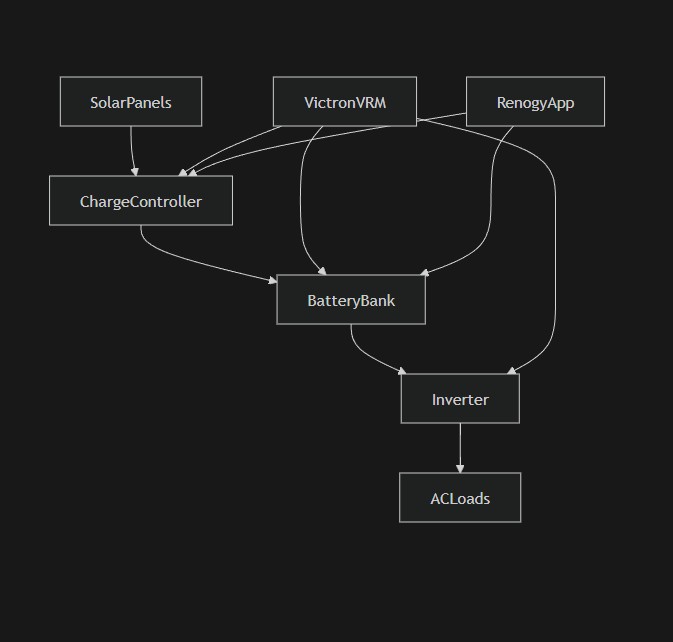
Victron supports full system monitoring, while Renogy offers partial monitoring.
Price Comparison: Renogy vs Victron 2026
| System Size | Renogy | Victron |
|---|---|---|
| Small Cabin | $2,000 | $3,500 |
| Medium Cabin | $4,000 | $6,500 |
| Full Off-Grid Home | $8,000 | $12,000+ |
Renogy saves money upfront. Victron saves money long-term.
Which Brand Lasts Longer?
| Victron | Renogy |
| 10-15 year lifespan Industrial components Passive cooling | 5-8 year lifespan Consumer-grade parts Fan cooling |
Victron clearly wins longevity.
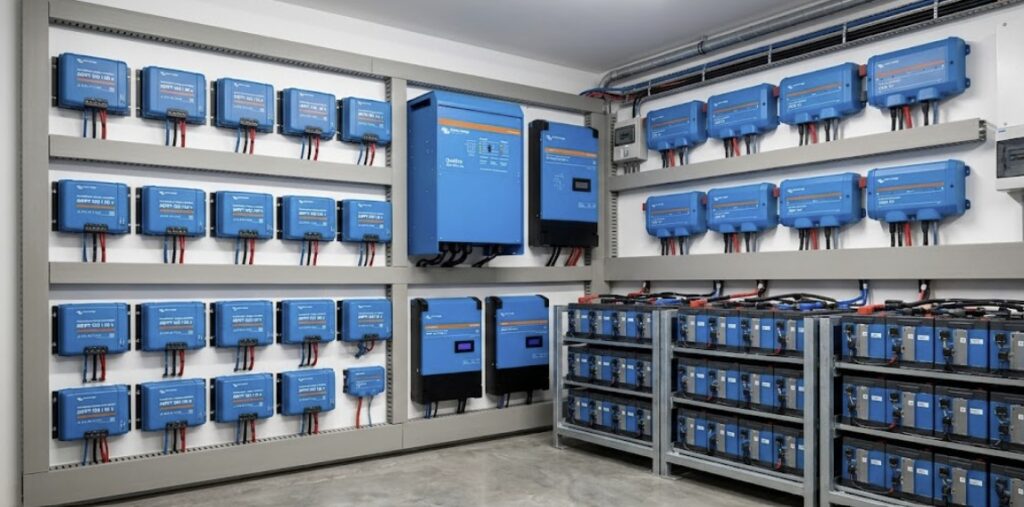
Best Use Cases: Renogy vs Victron
Choose Renogy If
- Budget is limited
- Weekend cabin
- Small RV system
- Beginner installation
- Light power usage
The Budget-Savvy Shortcut: Look, not every weekend retreat needs a high-end European power plant. If you’re building a simple setup for a summer cabin, the [Renogy Rover 40A MPPT] is unbeatable for the price. It’s a proven workhorse that handles 12V and 24V systems with ease. It might not have the high-speed tracking of a Victron, but it will save you $200 that you can spend on better solar panels.
Check current price on Amazon –>
Choose Victron If
- Full-time off-grid
- Remote cabin
- Marine environment
- Cold climates
- Long-term reliability
Hybrid Approach: Best of Both Worlds
Many experienced users combine:
- Renogy panels
- Victron charge controllers
- Victron inverter
- Third-party batteries
This reduces cost while maintaining performance.
The choice of regulator is so critical we’ve created a deep-dive technical analysis on [Victron vs Renogy charge controllers].
Renogy vs Victron Reliability in Harsh Conditions
| Victron performs better in | Renogy performs best in |
| Snow Heat Humidity Marine environments | Mild climates Occasional use Indoor installations |
Warranty and Support Comparison
| Feature | Renogy | Victron |
|---|---|---|
| Warranty | 1-5 Years | 5 Years |
| Global Support | Moderate | Excellent |
| Replacement Speed | Good | Excellent |
Victron support network is stronger globally.
Final Verdict: Renogy vs Victron 2026
Renogy vs Victron, both deliver excellent solar solutions, but they target different users.
| Renogy is best for | Victron is best for |
| Budget builds Beginner systems Small off-grid cabins RV solar setups | Full-time off-grid homes Remote cabins Professional installations Long-term reliability |
For serious off-grid living in 2026, Victron remains the premium choice. For affordable and reliable solar setups, Renogy continues to deliver outstanding value.
The best system depends on your budget, usage, and long-term goals.
Is Victron worth the extra cost over Renogy?
Victron is generally worth the extra cost when building a long-term off-grid system where reliability, efficiency, and expandability matter. Victron equipment is designed for continuous operation, better thermal management, and higher surge capacity, which becomes important when powering refrigerators, air conditioners, water pumps, and other heavy loads. Renogy, on the other hand, is often the better choice for budget-conscious users or occasional use systems. For weekend cabins, camper vans, or backup solar systems, Renogy delivers solid performance at a lower upfront cost. The decision ultimately depends on how critical your system is and how often it will be used.
Which brand is better for an off-grid cabin?
Victron is typically better for full-time off-grid cabins because of its superior reliability, advanced monitoring, and scalability. Many remote cabin owners prefer Victron because they can monitor their system remotely and receive alerts if battery levels drop or if system issues occur. Renogy works well for weekend cabins or seasonal use where advanced monitoring and heavy-duty performance are not necessary. If your cabin is used year-round or located in a remote area, Victron is usually the safer long-term investment.
Can you mix Renogy and Victron components in the same system?
Yes, many off-grid users combine Renogy and Victron components to balance cost and performance. A common setup includes using Renogy solar panels with a Victron MPPT charge controller and inverter. This approach allows users to save money on panels while benefiting from Victron’s superior electronics and monitoring. However, mixing brands may reduce smart integration capabilities, especially when it comes to system-wide communication and monitoring features.
Which brand lasts longer, Renogy vs Victron?
Victron equipment typically lasts longer than Renogy due to its industrial-grade components and passive cooling design. Many Victron systems operate reliably for ten years or more with minimal maintenance. Renogy components are still reliable but are generally designed for lighter-duty applications, with an average lifespan of five to eight years depending on usage and environmental conditions. For long-term installations, Victron often provides better value over time.
Which brand performs better in cloudy or winter conditions?
Victron usually performs better in cloudy or winter conditions because of its faster MPPT tracking and higher efficiency. This allows Victron controllers to extract more energy during low-light periods such as early morning, late afternoon, and overcast days. In colder climates or regions with limited sunlight, this difference can significantly impact overall system performance. Renogy still performs well but may produce slightly less energy under challenging weather conditions.
Is Renogy reliable enough for full-time off-grid living?
Renogy can be reliable enough for full-time off-grid living if the system is properly sized and installed. Many users successfully run Renogy systems full time, especially in moderate climates with predictable solar conditions. However, Victron is generally preferred for mission-critical systems because of its superior durability, surge handling, and monitoring capabilities. For users who rely completely on solar power every day, Victron usually offers greater peace of mind.
Which brand is better for lithium battery systems?
Victron is often better for lithium battery systems because it offers deeper integration with battery management systems and advanced charging control. Victron equipment can communicate with compatible lithium batteries to optimize charging performance and extend battery lifespan. Renogy lithium batteries still perform well and include built-in protection, but they typically offer less integration and fewer advanced features compared to Victron’s ecosystem.
Which brand is easier for beginners?
Renogy is generally easier for beginners because it offers complete solar kits, simpler wiring, and plug-and-play components. Many Renogy products are designed specifically for DIY users and include clear instructions for installation. Victron systems require more planning and configuration, which can be more complex for first-time solar users. However, once installed, Victron systems often provide a more advanced and flexible experience.
Which brand is better for RV and van life solar systems?
Renogy is very popular for RV and van life solar systems due to its affordability and easy installation. Many van builders choose Renogy kits because they are compact and simple to install. Victron is often chosen for full-time van life or overlanding setups where reliability and monitoring are more important. For users traveling long-term or relying heavily on solar, Victron offers better long-term performance.
Which brand offers better monitoring and remote control?
Victron offers significantly better monitoring and remote control through its VRM portal and smart ecosystem. Users can view battery levels, solar production, and system performance from anywhere with internet access. This is especially useful for remote cabins or unattended systems. Renogy offers Bluetooth monitoring and basic apps, but remote cloud monitoring is typically limited compared to Victron.
Which brand has better warranty and support?
Victron generally provides stronger warranty coverage and global support. Their standard warranty is often five years, and they have a large worldwide dealer network. Renogy offers good support and competitive warranties, but Victron is widely known for professional-level customer support and long-term reliability. This can be an important factor for remote installations.
Is Victron overkill for small off-grid systems?
Victron can be considered overkill for very small systems such as weekend cabins or small RV setups. If the system only powers lights, phones, and small electronics, Renogy usually provides sufficient performance at a lower cost. However, many users still choose Victron for small systems because of its reliability and expandability if future upgrades are planned.
Which brand is better for expanding a solar system later?
Victron is better for expansion because its ecosystem is designed for modular growth. Users can easily add additional batteries, solar panels, and inverters while maintaining system integration. Renogy systems can still be expanded, but they often lack the same level of communication and flexibility found in Victron setups. For users planning future upgrades, Victron is typically the better choice.
Which brand is best overall in 2026?
Both Renogy and Victron are excellent brands, but they serve different purposes. Renogy is best for affordable, beginner-friendly solar systems and occasional off-grid use. Victron is best for long-term, high-performance off-grid systems that require reliability, expandability, and advanced monitoring. The best choice depends on your budget, usage, and long-term off-grid goals.
Can I mix Renogy solar panels with a Victron charge controller?
Yes, you can absolutely mix brands, and it’s actually a very common setup for “prosumer” off-grid cabins. Many users choose Renogy solar panels because of their excellent price-per-watt and pair them with a Victron SmartSolar MPPT controller to benefit from Victron’s superior tracking efficiency and Bluetooth ecosystem. Just ensure that the total Voltage (Voc) and Amperage (Isc) of your Renogy panels do not exceed the maximum input ratings of your Victron controller. This “hybrid” approach often provides the best balance between initial investment and long-term system reliability.
8 thoughts on “Renogy vs Victron: The Ultimate 2026 Off-Grid Comparison”