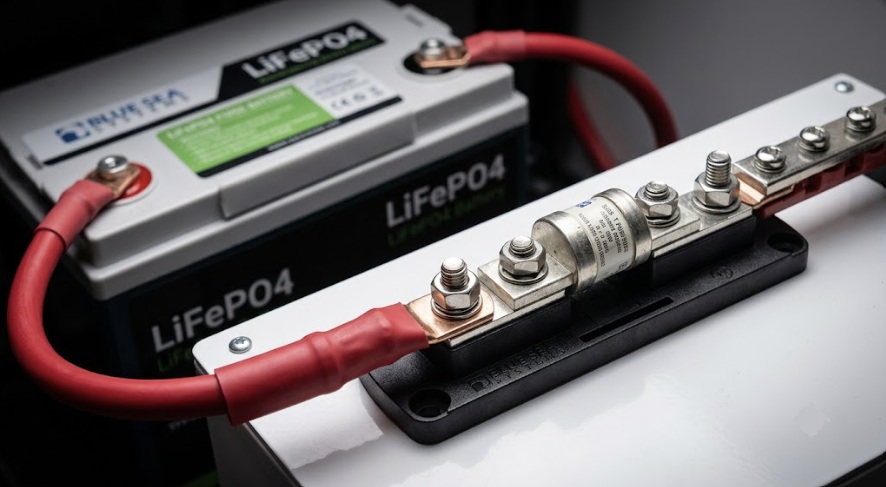
Choosing the correct overcurrent protection for a Lithium Iron Phosphate (LiFePO4) battery bank is not an optional accessory; it is the single most critical safety device in your entire off-grid electrical system. The immense fault current potential of lithium chemistry renders traditional automotive fuses, like ANL or MEGA types, dangerously inadequate.
This engineering guide provides the definitive technical analysis for selecting the best Class T fuse for LiFePO4 battery banks. We will dissect the physics of fault currents, provide precise sizing calculations, and review the top-tier hardware required for a safe, code-compliant, and reliable installation.
Table of Contents
The Critical Metric You’re Ignoring: AIC, Not Amperage
Most system builders focus solely on a fuse’s continuous amperage rating, like “200A” or “400A”. This is a catastrophic mistake. With LiFePO4 batteries, the paramount specification is the Amperage Interrupting Capacity (AIC), also known as the Interrupting Rating (IR).
AIC is the maximum fault current a fuse can safely interrupt without arcing over, exploding, or failing to stop the flow of electricity. A LiFePO4 battery can deliver a dead short in excess of 10,000 to 20,000 amps, while a lead-acid battery of similar capacity might only produce 3,000 to 5,000 amps. This order-of-magnitude difference is why your old fusing strategy is now obsolete and dangerous. Using an ANL fuse, with its typical 2,700A AIC, on a lithium bank is like trying to stop a tidal wave with a picket fence.
Fuse Type vs. Interrupting Capacity Comparison
The technical specifications below highlight the stark difference in safety ratings, which is foundational to understanding why finding the best Class T fuse for LiFePO4 battery banks is non-negotiable for high-current systems.
| Fuse Type | Typical AIC Rating (DC) | Common Voltage Rating | Primary Application Risk with LiFePO4 |
|---|---|---|---|
| MEGA / AMG | 2,000 A | 32V DC | Extreme risk of arcing and fire; cannot interrupt a LiFePO4 short. |
| ANL | 2,700 A – 6,000 A | 80V DC | Insufficient for most parallel banks; will likely fail under a direct short. |
| MRBF (Marine Rated) | 10,000 A @ 14V DC (Derates heavily with voltage) | 58V DC Max | Only suitable for small, single 12V batteries. Unsafe for 24V/48V banks. |
| Class T (JLLN / A3T) | 20,000 A | 125V – 300V+ DC | The engineering gold standard for all LiFePO4 battery bank protection. |
When a fuse with an inadequate AIC attempts to break a LiFePO4 fault current, the metal element vaporizes, but the immense electrical pressure instantly forms a plasma arc across the gap. This arc can sustain itself until the battery is depleted or the wiring melts, causing a catastrophic fire. This is not a theoretical risk; it is a documented failure mode. When choosing the best Class T fuse for LiFePO4 battery banks, you are paying for the certified ability to prevent this exact scenario.
Technical Anatomy of the Best Class T Fuse for LiFePO4 Battery Banks
A Class T fuse is an industrial-grade, current-limiting, and extremely fast-acting device. Its design is fundamentally different from simpler automotive fuses. Inside its compact ceramic body is a silver or copper fuse element packed in high-purity silica sand.
During a high-current fault, the element vaporizes in milliseconds. The surrounding sand is instantly melted into glass (a process known as fulgurite formation), which is non-conductive. This action simultaneously quenches the plasma arc and absorbs the intense thermal energy, safely interrupting currents up to 20,000 amps. This robust mechanism is what makes it the best Class T fuse for LiFePO4 battery banks, capable of handling the extreme energy density of lithium cells.
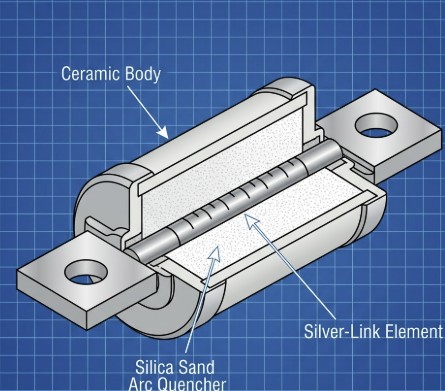
Properly selecting the best Class T fuse for LiFePO4 battery banks means looking for components certified under UL 248-15, ensuring they meet rigorous safety and performance standards.
How to Correctly Size Your Class T Fuse Amperage Rating
Once you’ve committed to the correct fuse *class* (Class T), you must then select the correct *amperage* rating. The fuse’s primary job is to protect the wiring from overheating. According to the National Electrical Code (NEC), the overcurrent protection device should be sized to protect the conductor (wire) based on its ampacity.
The main driver of your continuous current draw is typically the inverter. A simple and safe rule of thumb is to size the fuse at approximately 125% of your inverter’s maximum continuous current draw, ensuring this value does not exceed the ampacity of your main battery cables. Sizing your entire system correctly, from solar panels to the battery bank, is a crucial first step.
Inverter Size to Recommended Fuse Amperage
This table provides a starting point for determining the best Class T fuse for LiFePO4 battery banks based on common inverter sizes and system voltages. Always verify with your specific inverter and cable specifications.
| Inverter Size (Watts) | System Voltage | Max Continuous Amps (approx.) | Recommended Fuse Amperage (125% Rule) | Minimum Cable Size (AWG) |
|---|---|---|---|---|
| 2000W | 12V | 167A | 200A – 225A | 2/0 AWG |
| 3000W | 12V | 250A | 300A – 350A | 4/0 AWG |
| 3000W | 24V | 125A | 150A – 175A | 2 AWG |
| 5000W | 24V | 208A | 250A – 300A | 2/0 AWG |
| 5000W | 48V | 104A | 125A – 150A | 2 AWG |
| 8000W | 48V | 167A | 200A – 225A | 2/0 AWG |
Crucially, the fuse must be placed as close to the battery’s positive terminal as possible. The American Boat and Yacht Council (ABYC) E-11 standard, a widely respected benchmark for DC systems, mandates this placement be within 7 inches (18 cm) of the battery terminal to protect the entire cable run. This is a critical safety practice for any off-grid installation, whether it’s in a cabin, RV, or boat. The decision between different system voltages, like in a 12V vs. 24V vs. 48V solar system, directly impacts these calculations.
Top 3 Picks for the Best Class T Fuse for LiFePO4 Battery Banks in 2026
When it comes to catastrophic failure protection, brand reputation and certification matter. Avoid no-name, uncertified fuses. The small cost savings are not worth the immense risk to your property and safety. The following components are industry-standard choices from reputable manufacturers.
1. Blue Sea Systems 5006 Class T Fuse Block with Insulating Cover
Blue Sea Systems is the benchmark for marine-grade DC electrical components. Their 5006 fuse block is robust, ignition-protected, and features a snap-on insulating cover for safety. The large M8 or M10 studs allow for high-torque connections with large cable lugs, which is critical for minimizing heat generation.
- Pros: Marine-grade quality, excellent safety features, large connection studs, widely trusted brand.
- Cons: Can be more expensive than other options, slightly larger footprint.
[Check Price for Blue Sea Systems 5006 Class T Fuse Block on Amazon]
2. Bussmann by Eaton JJN Series Class T Fuse
Bussmann is a giant in industrial circuit protection, and their JJN series fuses are the components many high-end system integrators use. These fuses are known for their extremely fast short-circuit response and high DC voltage ratings (often up to 300VDC). When paired with a quality holder, they provide ultimate protection.
- Pros: Industrial-grade reliability, extremely fast-acting, high voltage ratings, UL listed.
- Cons: Requires purchase of a separate, compatible fuse holder.
[Check Price for Bussmann JJN Series 400A Class T Fuse on Amazon]
3. Mersen A3T Series Class T Fuses
Mersen is another top-tier industrial fuse manufacturer. Their A3T series is a direct competitor to the Bussmann JJN, offering similar fast-acting, current-limiting performance with a 20,000A AIC rating. They are a proven and reliable choice for protecting high-capacity lithium banks in demanding applications.
- Pros: High-quality construction, excellent performance specifications, often cost-competitive with Bussmann.
- Cons: Like Bussmann, a separate fuse holder is required for installation.
[Check Price for Mersen A3T300 300A Class T Fuse on Amazon]
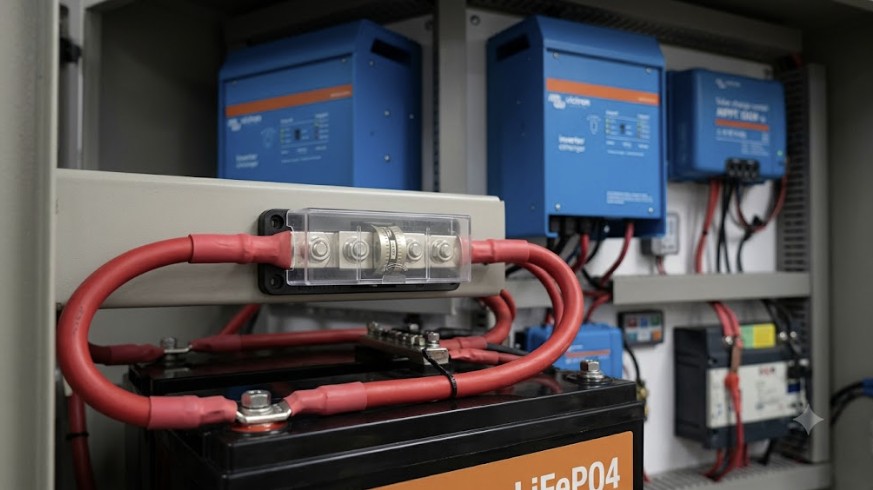
Class T vs. MRBF: When is the Cheaper Option Viable?
The primary alternative to a Class T fuse is the MRBF (Marine Rated Battery Fuse). MRBFs are compact, mount directly to the battery terminal, and are significantly cheaper. However, their limitations are severe and must be respected.
An MRBF’s AIC is typically rated at 10,000A, but this is *only* at 14V DC. As the system voltage increases to 24V or 48V, its interrupting capacity plummets dramatically, often to just 5,000A or less, making it unsafe. For this reason, the best Class T fuse for LiFePO4 battery banks is always the superior choice for safety and versatility.
Decision Framework: Class T vs. MRBF Fuse
This decision matrix clarifies when each fuse type is appropriate. Understanding the application is key to choosing the best Class T fuse for LiFePO4 battery banks or determining if a lesser option is acceptable.
| System Characteristic | Recommended Fuse Type | Reasoning |
|---|---|---|
| 24V or 48V System | Class T | MRBF AIC rating is severely derated at higher voltages and is unsafe. |
| Two or More Parallel Batteries | Class T | Combined fault current can easily exceed 10,000A, making MRBF inadequate. |
| Marine (ABYC Compliant) | Class T | Considered best practice for high-capacity banks to ensure maximum safety. |
| Single 12V LiFePO4 (< 200Ah) | MRBF (acceptable) | Fault current from a single, small battery is likely within the MRBF’s 10,000A AIC. |
| Large Inverter (>2500W @ 12V) | Class T | High continuous and surge currents warrant the most robust protection available. |
The only scenario where an MRBF is potentially acceptable is for a small, single 12V LiFePO4 battery in a non-marine application where no future expansion is planned. The moment you consider adding a second battery in parallel, such as when debating 2x 100Ah vs 1x 200Ah batteries, you must upgrade the main fuse to a Class T to handle the increased potential fault current.
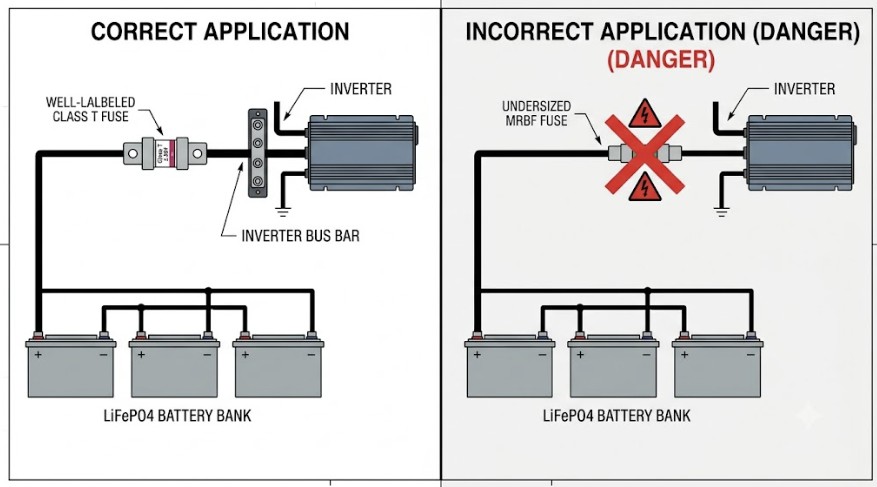
Common Installation Mistakes That Compromise Safety
Selecting the best Class T fuse for LiFePO4 battery banks is only half the battle. Improper installation can render even the best component ineffective.
The most common and dangerous mistake is failing to torque the connections to the manufacturer’s specification. A loose connection at the fuse holder stud creates high resistance. Under heavy load from an inverter, this resistance generates extreme heat, which can melt the fuse holder, damage the cable insulation, and become a significant fire hazard. Always use a calibrated torque wrench for these critical connections.
Another frequent error is incorrect fuse placement. As per NEC and ABYC standards, the fuse must be as close to the source of power as possible—the battery positive terminal. Placing the fuse downstream, such as near the off-grid cabin electrical panel, leaves the main battery cable unprotected. If this cable were to short to ground, there would be no protection, leading to a certain fire. For a comprehensive overview of electrical safety regulations, the National Electrical Code (NFPA 70) is the definitive resource.
Frequently Asked Questions
What AIC rating is truly needed for a LiFePO4 battery?
For LiFePO4 batteries, a minimum AIC rating of 10,000A is recommended for very small, single 12V banks, but a 20,000A AIC rating is the established engineering standard for safety, especially for any parallel battery configurations or systems operating at 24V or 48V. The massive short-circuit current potential of lithium cells can easily exceed the capabilities of fuses with lower AIC ratings like ANL or MEGA, leading to catastrophic failure. Therefore, adhering to this high AIC requirement is the most important factor when selecting the best Class T fuse for LiFePO4 battery banks.
Can I use a cheaper ANL or MEGA fuse instead of a Class T fuse?
No, you absolutely should not use an ANL or MEGA fuse as the primary protection for a LiFePO4 battery bank. These fuses have AIC ratings (typically 2,000A to 6,000A) that are dangerously insufficient to interrupt the potential fault current of a lithium battery, which can exceed 20,000A. Attempting to do so creates a severe risk of the fuse failing to open the circuit, leading to a sustained electrical arc, equipment meltdown, and a significant fire hazard. Investing in the best Class T fuse for LiFePO4 battery banks is a critical safety requirement, not an optional upgrade.
Does my battery’s BMS replace the need for an external fuse?
A Battery Management System (BMS) is not a substitute for a catastrophic overcurrent protection device. While a BMS provides crucial electronic protection against over-charge, over-discharge, and short circuits, it is a complex electronic component that can fail. A fuse is a simple, passive, and incredibly reliable sacrificial device. In a worst-case scenario, such as a direct short across the main battery cables or a BMS failure, the external fuse is the final line of defense. Proper system design always includes finding the best Class T fuse for LiFePO4 battery banks as a mandatory external safety layer.
How do I calculate the correct fuse amperage for my inverter?
A safe and common method is to size the fuse at 125% of the inverter’s maximum continuous current draw. First, calculate the max current by dividing the inverter’s wattage by the system’s nominal voltage (e.g., 3000W / 12V = 250A). Then, multiply that current by 1.25 (e.g., 250A * 1.25 = 312.5A). You would then choose the next standard fuse size up, such as a 350A fuse. Always ensure the fuse rating does not exceed the ampacity of the wire it is protecting. This calculation is a fundamental step in choosing the best Class T fuse for LiFePO4 battery banks.
Where exactly should the Class T fuse be installed in the circuit?
The Class T fuse must be installed on the main positive battery cable as close to the battery’s positive terminal as physically possible. Industry standards like the ABYC E-11 specify a maximum distance of 7 inches (18 cm). This placement ensures that the entire length of the main cable run to your inverter and DC distribution panel is protected. Placing the fuse anywhere else leaves a section of the cable unprotected and vulnerable to a catastrophic short circuit, which undermines the core reason for installing the best Class T fuse for LiFePO4 battery banks.
Is a Class T fuse required for just a single 12V 100Ah LiFePO4 battery?
While a Class T fuse is always the safest option, a high-quality MRBF (Marine Rated Battery Fuse) with a 10,000A AIC rating is generally considered acceptable for a single 12V 100Ah LiFePO4 battery in a non-marine application. The fault current of a single small battery is unlikely to exceed the MRBF’s rating. However, if you plan to ever expand your system by adding batteries in parallel, you should install a Class T fuse from the start, as selecting the best Class T fuse for LiFePO4 battery banks is mandatory for parallel configurations.
What should I do if my Class T fuse blows?
A blown fuse is a symptom of a serious underlying problem in your electrical system. Do not simply replace it. A blown Class T fuse indicates a massive overcurrent event, such as a dead short in your wiring, a catastrophic inverter failure, or a problem with your off-grid generator connection. You must thoroughly inspect the entire system, find the fault, and correct it before installing a new fuse. Simply replacing the fuse without diagnosing the cause will result in another blown fuse and could lead to a fire. This troubleshooting is an essential part of maintaining a system that uses the best Class T fuse for LiFePO4 battery banks.
Can I use the same Class T fuse in a 12V, 24V, or 48V system?
Yes, one of the major advantages of Class T fuses is their high DC voltage rating, typically 125VDC or higher. This makes them suitable for use across all common off-grid system voltages (12V, 24V, and 48V) without any derating of their 20,000A AIC. This versatility and consistent safety margin across different system architectures is a primary reason they are considered the best Class T fuse for LiFePO4 battery banks in any configuration.
How does putting LiFePO4 batteries in parallel affect my fuse choice?
Paralleling batteries dramatically increases the available short-circuit current. The potential fault current of the entire bank is roughly the sum of each individual battery’s fault current. For example, if one 100Ah battery can produce 8,000A, three in parallel can produce 24,000A. This is why a Class T fuse with its 20,000A AIC is absolutely mandatory for any parallel LiFePO4 battery bank. An MRBF or ANL fuse would be overwhelmed and fail dangerously. This is the most critical consideration when choosing the best Class T fuse for LiFePO4 battery banks.
Are cheap, unbranded Class T fuses from Amazon or eBay safe to use?
It is extremely risky to use unbranded, uncertified Class T fuses from unknown sellers. The high AIC rating of a genuine Class T fuse comes from precise engineering, high-purity materials, and rigorous testing under standards like UL 248-15. Counterfeit or poorly manufactured fuses may not contain the correct materials or construction to safely quench a high-current DC arc, even if they look identical. Given the fuse’s role as a critical safety device, you should only purchase from reputable manufacturers like Bussmann, Mersen, or Blue Sea Systems. Your search for the best Class T fuse for LiFePO4 battery banks must prioritize certified quality over small cost savings.
What does the term “current-limiting” mean for a Class T fuse?
A current-limiting fuse is one that opens so quickly during a major fault that it prevents the short-circuit current from ever reaching its maximum potential peak. This rapid action significantly reduces the total destructive energy (I²t) released into the circuit, which helps protect downstream components like inverters and charge controllers from damage. This fast, energy-reducing behavior is a key advantage of industrial fuses and a defining characteristic of the best Class T fuse for LiFePO4 battery banks, setting it apart from slower, non-current-limiting automotive fuses.
Do I also need a fuse on the negative battery cable?
No, according to the National Electrical Code (NEC) and established best practices, overcurrent protection is only required on the ungrounded conductors, which in a standard negative-ground DC system is the positive cable. Fusing the negative (grounded) cable is generally not recommended because if it were to blow while the positive circuit remained active, it could create confusing and potentially hazardous voltage references throughout the system. Proper protection focuses on the positive side, which is where you install the best Class T fuse for LiFePO4 battery banks.
Is it better to use one large fuse for a parallel bank or fuse each battery individually?
The safest and most robust design, especially for larger banks, uses both. Each parallel battery should have its own smaller fuse (MRBFs are often acceptable here if it’s a 12V system) located at its positive terminal. These individual fuses protect the wiring from that specific battery to the main bus bar and can isolate a single faulty battery from the rest of the bank. Then, a single, larger main fuse is installed after the bus bar to protect the main cable feeding the inverter. This main fuse must be the best Class T fuse for LiFePO4 battery banks to handle the combined fault current of the entire bank.