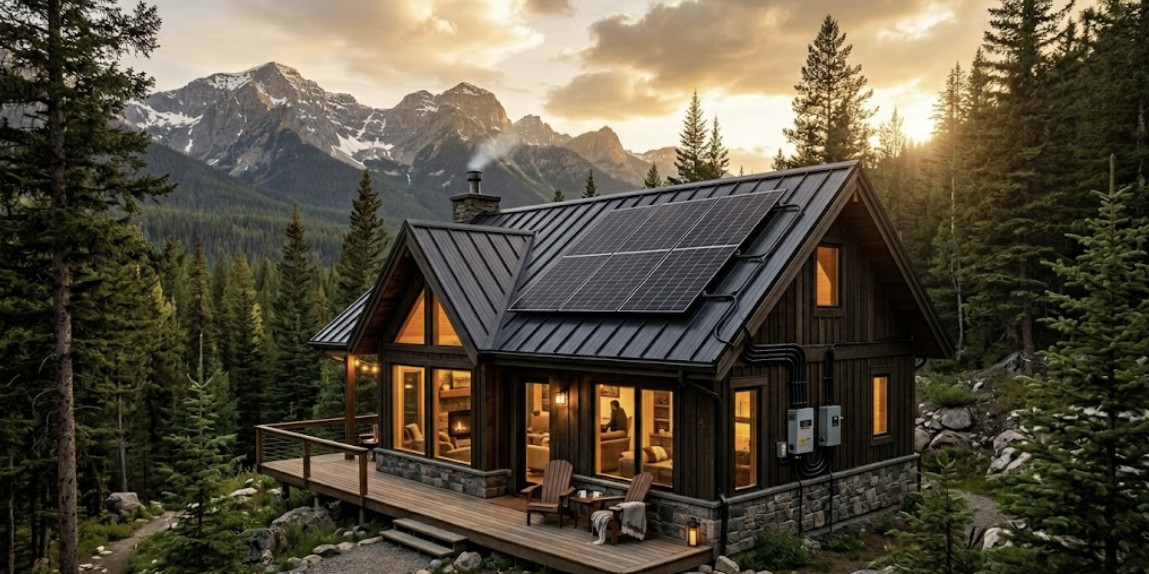
A solar system small retreat cabin delivers independence, silence, and long-term sustainability. Whether we build a minimalist forest getaway, mountain hideaway, or off-grid meditation retreat, the right design ensures reliable power without sacrificing simplicity.
This comprehensive guide outlines the exact strategy, sizing, components, stealth setup techniques, and installation blueprint required to build a professional-grade solar system small retreat cabin that outperforms standard cabin solar setups.
Step 1 — Estimate Daily Energy Use
Table of Contents
Why a Cabin solar kit Is the Ideal Off-Grid Solution
A properly designed solar system small retreat cabin delivers advantages that traditional power solutions cannot match:
- Silent operation for nature immersion
- No fuel transportation requirements
- Minimal maintenance
- Long system lifespan (20–30 years)
- Scalable energy independence
- No grid dependency
Unlike generators, a solar system small retreat cabin operates continuously, storing power during daylight and supplying energy during nighttime or cloudy weather.
Passive Energy Design for a Remote power system
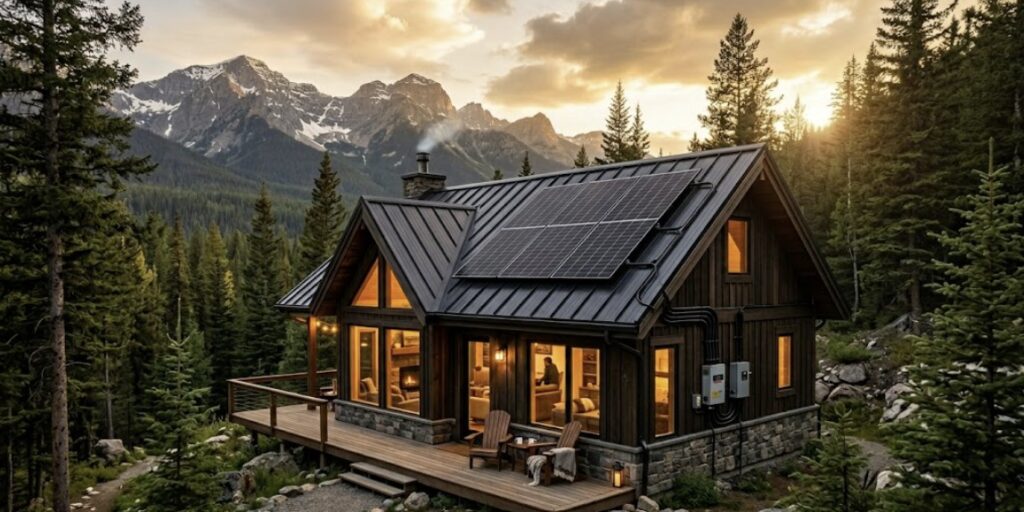
Before installing additional solar panels, we reduce power consumption using passive design. A properly planned solar system small retreat cabin uses significantly less energy, reducing system costs and increasing reliability.
Passive Solar Orientation
We position the solar system small retreat cabin to capture natural heat and daylight:
- South-facing windows (Northern Hemisphere)
- Roof overhangs for summer shading
- Thermal mass flooring (stone or concrete)
- Insulated walls and ceiling
This reduces heating and lighting needs by up to 40%.
Core Components for Small Cabin Power
Every high-performance solar system small retreat cabin includes five essential components:
1. Solar Panels
Panels capture sunlight and convert it into electricity. For a solar system small retreat cabin, we recommend:
- Monocrystalline panels (highest efficiency)
- 300W–450W panels for compact roof space
- Low-profile black panels for stealth installations
If your cabin has limited roof real estate, don’t waste space on multiple 100W panels. I recommend going straight to [Renogy 320W Monocrystalline Panels]. These “high-density” modules use Grade A+ solar cells and half-cut cell technology, which means even if a stray branch shades part of the panel, the rest keeps producing. It’s the most professional way to hit 900W of production with just two mounting points.
Check current price on Amazon –>
Typical solar system small retreat cabin size:
- 2–6 panels depending on usage
Efficiency is paramount when space is limited. Check our 2026 rankings for the [best solar panels for tiny house] setups.
2. Battery Bank
The battery bank stores energy for nighttime and low-sun periods.
Determining your bank’s voltage is just as critical as its capacity. To understand why we recommend jumping from 12V to 24V for cabins, check out our guide on 24V systems and battery efficiency.
Best battery types for a solar system small retreat cabin:
- Lithium Iron Phosphate (LiFePO4) — Best performance
- AGM batteries — Budget option
- Gel batteries — Low maintenance
Recommended storage capacity:
| Cabin Use | Battery Size |
|---|---|
| Weekend retreat | 2–4 kWh |
| Tiny living cabin | 5–10 kWh |
| Full-time off-grid | 10–20 kWh |
Selecting the [best solar battery for cabin] use is critical for long-term sustainability. We recommend LiFePO4 for its 10-year lifespan and safety.
3. Charge Controller
A charge controller regulates energy flow:
- MPPT Controllers (Recommended)
- PWM Controllers (Budget setups)
MPPT controllers increase efficiency by 20–30%, making them ideal for a solar system small retreat cabin.
We recommend an MPPT model for efficiency. Compare the top two market leaders in our [Victron vs Renogy charge controllers] technical guide.
4. Inverter
The inverter converts DC battery power into AC household electricity.
Recommended inverter sizes:
- 1000W — Minimal cabin
- 2000W — Standard retreat cabin
- 3000W — Expanded cabin setup
Note: 24V inverters are generally more efficient and run much cooler than 12V models. You can see a technical comparison of 12V vs. 24V inverter performance here.
5. Mounting & Wiring
Mounting options:
- Roof mount (most common)
- Ground mount (best for stealth)
- Portable mount (temporary cabins)
Ultra-Efficient Appliances for a Remote power system
Choosing efficient appliances dramatically improves solar system small retreat cabin performance.
Recommended low-power appliances:
- 12V DC refrigerators
- LED cabin lighting
- Propane cooktops
- DC ceiling fans
- Laptop instead of desktop
Energy-efficient appliances reduce solar panel requirements and extend battery life.
Cabin solar kit Sizing Guide
Sizing your retreat cabin correctly ensures uninterrupted power.
Step 1 — Estimate Daily Energy Use
Typical small retreat cabin energy usage:
| Appliance | Watts | Daily Hours | Total |
|---|---|---|---|
| LED Lights | 40W | 5 | 200Wh |
| Laptop | 60W | 4 | 240Wh |
| Phone Charging | 15W | 3 | 45Wh |
| Mini Fridge | 80W | 8 | 640Wh |
| Water Pump (Consider the [greywater recycling benefits] of reusing water to decrease your total pump cycles). | 100W | 1 | 100Wh |
Daily Total: ~1,225Wh
Recommended retreat cabin size:
- 400W–800W solar array
- 3–6 kWh battery storage
For a high-precision breakdown of appliance loads including mini-split HVAC and seasonal adjustments, check our detailed [400 sq ft cabin power needs planning guide].
Cabin solar kit Layout
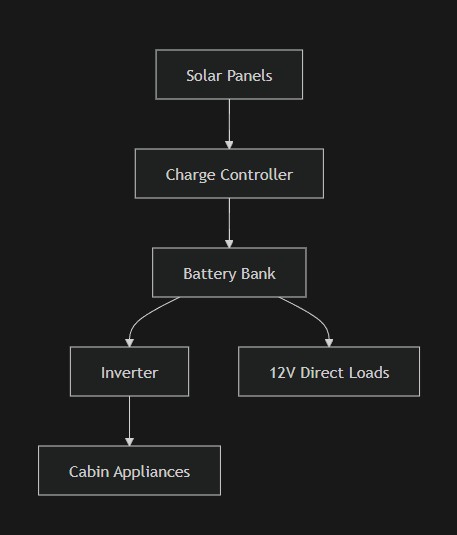
This layout ensures maximum efficiency and reliability.
Off-Grid vs Hybrid Solar System Small Retreat Cabin
Fully Off-Grid
Best for remote cabins:
- No grid connection
- Full independence
- Requires larger battery storage
Hybrid Retreat Cabin
Best for semi-remote cabins:
- Solar primary power
- Backup grid or generator
- Smaller battery required
Hybrid Energy Backup
A professional solar system small retreat cabin integrates backup energy sources.
Backup Power Options
Propane Generator Backup
| Benefits: | Reliable emergency power Compact storage Low maintenance |
Wind Turbine Integration
| Wind turbines complement in: | Mountain areas Coastal regions Winter climates |
Micro Hydro System
| If flowing water exists nearby: | Continuous energy production Minimal battery dependency Extremely reliable |
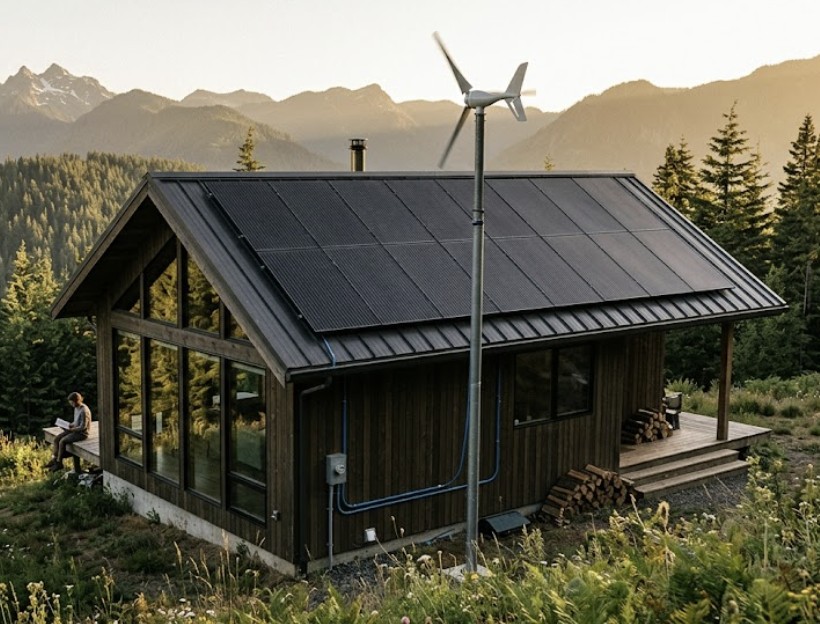
Solar Panel Placement for Maximum Output
| Optimal placement for a solar system: | South facing orientation (Northern Hemisphere) 25°–40° tilt angle No tree shading |
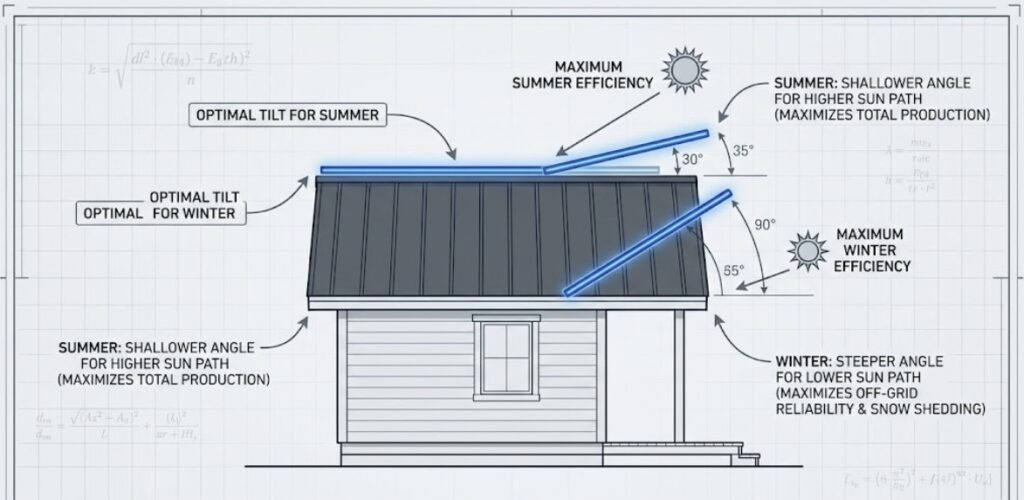
For 2026, we also recommend looking into bifacial panels, which are explained in our [micro cabin installation guide], as they capture reflected light from snow or ground—perfect for remote mountain sites.
Four-Season Remote power system Planning
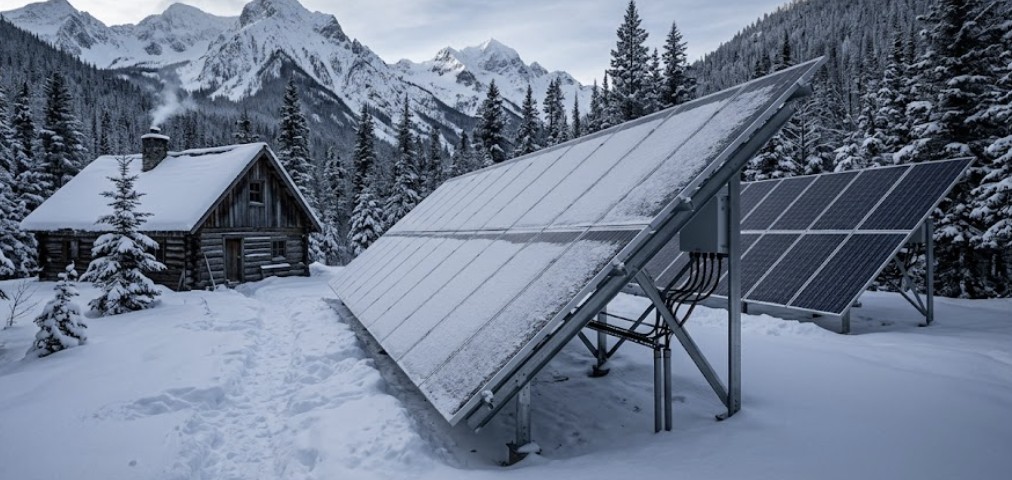
A solar system small retreat cabin must handle seasonal changes, especially winter.
Winter Optimization Strategy
| We increase system reliability by: | Adding 30% more solar capacity Increasing battery storage Installing adjustable panel mounts Using snow-shedding panel angles |
These upgrades ensure the solar system small retreat cabin continues producing power during short winter days.
Climate-Specific Remote power system Design
We adapt the solar system small retreat cabin based on climate.
Cold Climate Cabins
| Focus areas: | High insulation Wood stove heating Smaller window sizes Battery temperature protection |
Hot Climate Cabins
| Focus areas: | Ventilation design Reflective roofing Shaded solar panels Passive cooling airflow |
The Stealth Setup: Concealing Panels from Bears, Robbers, and Harsh Environments
A solar system small retreat cabin often exists in remote locations where security matters. The Stealth Setup protects your solar investment.
Stealth Setup Strategy #1 — Ground-Level Hidden Array
Instead of roof mounting:
- Place panels behind tree line
- Use low-angle mounts
- Hide wiring underground: Keep in mind that remote setups suffer from power loss in the cables. A 24V system is essential here to reduce voltage drop over long wire runs.
Benefits:
- Harder to spot from distance
- Protected from wind damage
- Reduced theft risk
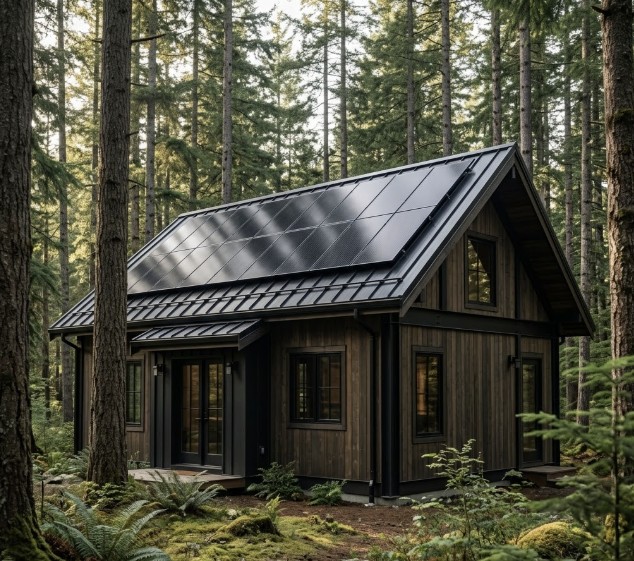
Stealth Setup Strategy #2 — Cabin Roof Camouflage
We conceal panels using:
- Matte black solar panels
- Flush mounting
- Low-profile rails
This makes the retreat cabin nearly invisible from above.
Stealth Setup Strategy #3 — Detachable Portable Panels
| Portable panels allow: | Best for: |
| Storage indoors when away Seasonal deployment Protection from wildlife | Bear territory Remote wilderness cabins Seasonal retreat cabins |
Stealth Setup Strategy #4 — Fake Shed Solar Mount
| Install panels on: | Benefits: |
| Woodshed roof Tool shed Detached structure | Cabin appears non-electrified Reduces theft risk Adds flexibility |
Off-grid setup Security Planning
Remote cabins require strong security planning.
Physical Security
Recommended measures:
- Hidden battery storage
- Lockable solar mounts
- Reinforced wiring conduits
- Motion lighting
Remote Monitoring
We install:
- Solar-powered cameras
- Remote battery monitoring
- Smart solar controllers
My top recommendation for peace of mind is the [Reolink Go PT Ultra]. It’s a 4K camera that doesn’t need Wi-Fi or a power outlet. It runs on the 4G/LTE network and charges via its own small solar panel. Being able to rotate the camera 360° from your phone while you’re 200 miles away is the best insurance policy for your off-grid investment.
Check current price on Amazon –>
These features protect your solar system small retreat cabin investment.
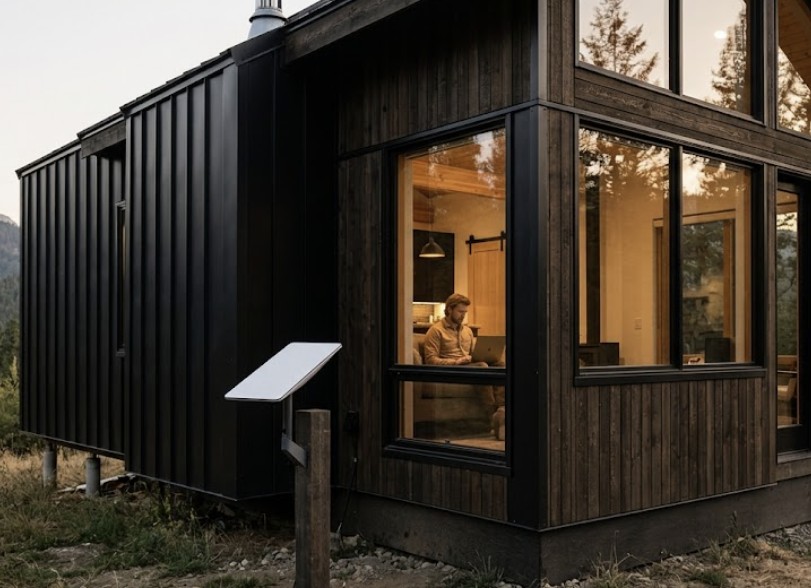
Remote Internet for Off-grid setup
Modern off-grid retreats benefit from connectivity.
| Options include: | Benefits: |
| Satellite internet Cellular boosters Solar-powered routers | Remote work capability Security monitoring Weather tracking |
Best Solar Panels for Solar System Small Retreat Cabin
Recommended panel characteristics:
- Monocrystalline efficiency
- Weather resistant
- 25-year warranty
- Low-profile black frame
Typical wattage range:
- 350W panels (compact roofs)
- 400W panels (balanced performance)
- 450W panels (maximum output)
Cabin solar kit Installation Steps
Step-by-Step Installation
- Install mounting brackets
- Attach solar panels
- Run wiring to charge controller
- Connect battery bank
- Install inverter
- Test system
This process typically takes:
- DIY: 1–2 days
- Professional: 4–6 hours
The heart of your build is the electrical layout. Download our [24V solar system wiring diagram] to guide your installation.
Cabin solar kit Implementation Timeline
Typical timeline:
| Week 1 | Week2 | Week3 |
| Planning Site evaluation | Cabin preparation Mount installation | Solar installation Testing |
This structured approach ensures success.
Cabin solar kit Heating Solutions
Heating is one of the biggest energy demands.
Best options:
- Wood stove
- Propane heater
- Passive solar heating
Avoid electric heating unless the solar system small retreat cabin is oversized.
Remote power system Lighting Design
Lighting design improves energy efficiency.
| Recommended setup: | Benefits: |
| Warm LED lights Motion sensors Task lighting | Reduced energy consumption Longer battery runtime |
Off-grid setup Food Storage Strategy
Off-grid food planning reduces power demand.
Recommended methods:
- Root cellar
- Solar dehydrator
- Propane refrigerator
This reduces reliance on electrical refrigeration.
Solar System Small Retreat Cabin Cost Breakdown
Typical costs:
| Component | Cost Range |
|---|---|
| Solar Panels | $400–$2000 |
| Batteries | $800–$5000 |
| Inverter | $300–$1500 |
| Charge Controller | $150–$600 |
| Wiring & Mounting | $200–$700 |
You can save up to 30% in copper wiring costs by choosing a 24V design over a 12V one. [See the wire savings breakdown here].
Building a retreat on a budget? Check our updated [solar panels for tiny home cost] guide for 2026 pricing.
Total solar system small retreat cabin cost:
- Budget setup: $1,500
- Standard setup: $3,500
- Premium setup: $8,000+
Portable Remote power system Option
| Portable systems work well for: | Advantages: |
| Weekend cabins Hunting cabins Minimalist retreats | No installation required Expandable Easy relocation |
If the idea of wiring busbars and crimping 2/0 AWG cables makes you nervous, just get an [EcoFlow DELTA Pro 3]. It is a complete 24V-equivalent system (Inverter + LiFePO4 Battery + Charge Controller) in a single portable unit. You literally plug your panels into the back and your appliances into the front. It’s the fastest way to bring modern 2026-standard power to a retreat without hiring an electrician.
Check current price on Amazon –>
Remote power system Maintenance
Maintenance is minimal:
- Clean panels 2–3 times per year
- Inspect wiring annually
- Monitor battery health
Typical lifespan:
- Panels: 25–30 years
- Batteries: 8–15 years
- Inverter: 10–15 years
Remote power system Long-Term Durability
We select durable materials:
- Metal roofing
- Weatherproof wiring
- Lithium batteries
- Heavy-duty mounts
These extend system lifespan.
Expandable Off-grid setup Design
We design systems that grow:
| Phase 1 | Phase 2 | Phase 3 |
| 400W panels 3kWh battery | Add 400W panels Add additional batteries | Full off-grid living capability |
This modular approach makes a solar system small retreat cabin future-proof.
We design systems that grow. If you’re wondering if you should wait for newer tech, read our verdict on [LiFePO4 vs solid state batteries for solar].
Off-grid setup Water Independence
A true solar system small retreat cabin includes independent water solutions.
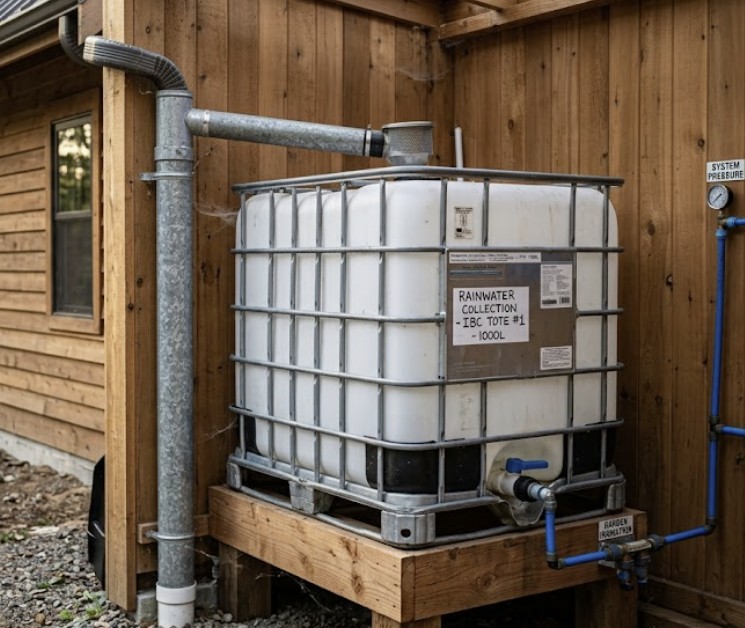
Rainwater Harvesting System
Components:
- Metal roof
- Gutters
- First flush diverter
- Storage tanks
- Filtration system
This provides reliable water for:
- Drinking
- Cooking
- Cleaning
- Showering
Cabin solar kit Waste Management
Efficient waste systems improve sustainability.
| Recommended systems: | Benefits: |
| Composting toilet Greywater recycling Natural filtration beds | No septic system required Reduced environmental impact Lower installation costs |
Cabin solar kit Emergency Preparedness
We prepare for long-term independence.
| Recommended items: | Backup batteries Portable solar panels Emergency lighting Water storage |
These additions ensure continuous operation.
Cabin solar kit Energy Efficiency Checklist
We optimize performance using:
- Insulated windows
- DC appliances
- Smart energy monitoring
- Low-power lighting
- Timed water pumps
These improvements dramatically increase solar system small retreat cabin efficiency.
Solar System Small Retreat Cabin Professional Design Principles
We follow these principles:
- Efficiency first
- Expandable systems
- Stealth integration
- Climate adaptation
- Low maintenance
These principles ensure long-term success.
Ideal Use Cases for Cabin solar kit
- Forest meditation cabins
- Mountain retreats
- Tiny homes
- Hunting cabins
- Writer cabins
- Remote guest houses
Modern off-grid work requires high-speed data, but you must account for [Starlink power consumption for off-grid cabins] in your battery planning.
A solar system small retreat cabin adapts to any off-grid scenario. If your project is specifically a tiny structure under 200 sq ft, follow our dedicated [solar setup for micro cabin guide] for a more compact approach.
Final Solar System Small Retreat Cabin Blueprint
Best balanced setup:
- 800W solar panels
- 5kWh lithium battery: For this setup, a 24V configuration is the performance ‘sweet spot.’ [Learn how to wire your system for 24V step-by-step].
- 2000W inverter
- MPPT charge controller
This configuration powers:
- Lighting
- Laptop
- Refrigerator
- Water pump (Reduce pump runtime by pairing your setup with [residential greywater recycling systems]).
- Charging devices
Solar System Small Retreat Cabin: The Long-Term Energy Solution
A properly designed solar system small retreat cabin creates energy independence, security, and sustainability. With stealth installation options, modular expansion, and long-term reliability, this system transforms any small cabin into a fully functional off-grid retreat.
By implementing the strategies above, we build a solar system small retreat cabin that is efficient, discreet, resilient, and ready for decades of quiet, renewable power.
Can a solar system small retreat cabin provide power year-round?
Yes, a properly designed solar system small retreat cabin can provide reliable power throughout the year. To ensure consistent performance, we typically increase solar panel capacity, install larger battery storage, and adjust panel tilt for winter sun angles. These adjustments help maintain power during shorter winter days and cloudy conditions, especially in remote or forested locations.
What is the best battery size for a small retreat cabin?
Battery size depends on how often the cabin is used and which appliances we run. For weekend retreats, smaller battery banks usually provide enough storage for lighting and charging devices. If we add refrigeration, water pumps, or longer stays, we increase battery capacity to store more energy. A larger battery bank also improves reliability during cloudy weather or winter months.
Do we need a backup power source for a retreat cabin solar system?
Backup power is recommended for remote retreat cabins, especially in harsh climates or areas with limited sunlight. Many small retreat cabins use propane generators, portable solar panels, or wind turbines as secondary power sources. These backup options provide extra reliability and ensure that essential systems continue running during extended low-sun periods.
Where should we place solar panels for a small retreat cabin?
Solar panels perform best when installed in a location that receives full sunlight throughout the day. South-facing placement is typically ideal in the Northern Hemisphere. We also avoid shading from trees, mountains, or nearby structures. In some retreat cabins, panels are mounted on ground-level hidden arrays or detached sheds to improve exposure and protect equipment.
Can a solar system small retreat cabin be expanded later?
Yes, most modern retreat cabin solar systems are designed to be expandable. We can add more solar panels, increase battery storage, or upgrade the inverter as power needs grow. Planning for expansion from the beginning helps avoid rewiring and makes future upgrades simple and cost-effective.
Why is 24V the “sweet spot” for a 400 sq ft cabin instead of 12V or 48V?
In a 400 sq ft setup, you often run mid-range loads like a refrigerator and a water pump simultaneously. A 12V system would require massive, expensive copper cables to handle the amperage, while 48V can be overkill and more expensive for components. Choosing a 24V off-grid solar system for cabins reduces your wiring costs and line loss significantly, offering the best balance of efficiency and budget for this specific cabin size.
18 thoughts on “Solar System Small Retreat Cabin: The Complete Off-Grid Power Blueprint for Quiet, Reliable Energy”